

How to Laser Cut Spandex Fabric?
◇Key Takeaways
◆The Core Problem: Traditional blade cutting easily causes stretching and fraying edges on elastic fabrics like Spandex, compromising precision and efficiency.
◆The Optimal Solution: Laser cutting is a non-contact process that eliminates physical stretching entirely, ensuring 100% accurate cut shapes.
◆Key Advantage: The laser's heat instantly melts and seals fabric edges, achieving a perfect fray-free finish and eliminating the need for subsequent overlocking.
◆Professional Assurance: Integrated systems (auto-feeding, tension control, intelligent software) ensure consistent, high-efficiency mass production.
◆Return on Investment: Switching to laser cutting can significantly reduce material waste and increase processing speed, making it a smart upgrade for high-quality activewear and swimwear manufacturing.
Introduction of Spandex Fabric
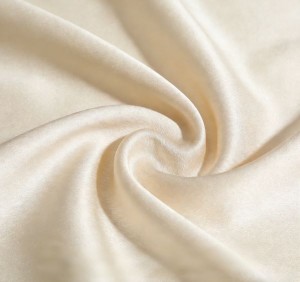
Spandex Fabric
Spandex is a synthetic fiber renowned for its extraordinary elasticity and ability to stretch comfortably. It is widely used in form-fitting apparel such as activewear, swimwear, and shapewear. Made from a polyurethane polymer, Spandex can stretch up to 500% of its original length while providing softness, durability, and shape retention.
Lycra vs Spandex vs Elastane
Lycra and elastane are both brand names for spandex fibers. Lycra is a brand name owned by the global chemical company DuPont, while elastane is a brand name owned by the European chemical company Invista. Essentially, they are all the same type of synthetic fiber that provides exceptional elasticity and stretchability.
To fully harness the benefits of spandex without compromising its structure, laser cutting provides an accurate, efficient, and fray-free solution.
Why Choose Laser Cut Spandex Fabric?
Cutting stretchy spandex with scissors or blades often leads to slipping, fraying, and stretched-out edges—resulting in uneven pieces and extra finishing work. That’s why professional manufacturers rely on laser cutting.
The laser never touches the fabric, so there’s no pulling, no distortion, and no stretching. You get perfectly sealed edges, exceptional precision, and consistent results every time—letting you work smarter, not harder, with this flexible material.
▶Key Advantages of Laser Cut Spandex
Perfect Sealed Edges
The laser’s heat instantly melts fibers as it cuts, creating a smooth, fray-free edge that requires no extra finishing.
Zero Stretch & Distortion
Since the laser never touches the fabric, there’s no pulling or pressure. Every piece retains its exact shape and size, essential for form-fitting apparel.
Extreme Precision
Cut intricate designs, fine details, and clean curves with digital accuracy—ideal for technical patterns and perforated textures.
Fast & Consistent
Automate the cutting process for higher output, repeatable quality, and reduced labor—perfect for batches and production runs.
Works Across Blends
Whether it’s pure spandex or mixed with cotton, polyester, or nylon, the laser adapts easily without compromising the fabric’s integrity.
Clean & Professional Finish
Each cut is crisp and sealed, giving your final product a polished, ready-to-sew edge that elevates quality and reduces waste.
How does this actually look? The video below shows a direct comparison between laser and CNC cutting on spandex
Fabric Laser Cutter vs CNC Knife Cutter
Laser cutting is suitable for cutting elastic fabrics such as spandex because it provides precise, clean cuts that do not fray or damage the fabric. Laser cutting uses a high-powered laser to cut through the fabric, which seals the edges and prevents fraying. In contrast, a CNC knife cutting machine uses a sharp blade to cut through the fabric, which can cause fraying and damage to the fabric if not done properly. Laser cutting also allows for intricate designs and patterns to be cut into the fabric with ease, making it a popular choice for manufacturers of athletic wear and swimwear.
Ready to Achieve Flawless Cuts on Your Spandex Projects?
Contact Our Experts for a Cutting Evaluation
Fabric Laser Machines for Your Spandex Fabric
To achieve flawless cuts on spandex—sealed edges, no distortion, top precision—you need more than a standard laser. You need a cutter engineered for fabric, with systems built to handle stretchy, challenging materials like spandex.
Automated Feeding
Forget manually aligning and cutting each piece. An integrated auto-feeder (conveyor system) continuously and smoothly rolls fabric through the cutting area. This allows for long, uninterrupted production runs and eliminates human handling that can cause stretching or misalignment.
Intelligent Software
The cutting process is driven by smart software that does more than just guide the laser. It:
Translates your digital designs into perfect cuts.
Nests patterns intelligently to maximize fabric use and reduce waste.
Ensures every cut, from the first to the thousandth, is identical.
Tension Control System
This is the secret weapon for cutting stretchy spandex without distortion:
Tension Control: Gently keeps the fabric uniformly taut.
Vacuum Table: Uses air pressure underneath to suck the fabric flat, preventing any shift or ripple during cutting.
Together, these systems create a perfectly stable cutting zone, guaranteeing that the laser’s precision translates into reality.
Watch the video below to see this precision engineering in action.
Swimwear Laser Cutting Machine | Spandex & Lycra
A vision laser cutter is the ideal choice for laser cutting elastic fabrics like sublimation swimwear. It ensures flawless results with no distortion, adhesion, or pattern damage, while delivering high-speed, precise cuts that boost production and lower costs.
▶Recommended Fabric Laser Cutter
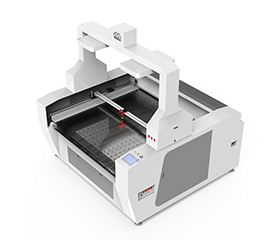
| Working Area (W *L) | 1600mm * 1200mm (62.9” * 47.2”) |
| Max Material Width | 62.9” |
| Laser Power | 100W / 130W / 150W |

| Working Area (W *L) | 1800mm * 1300mm (70.87’’ * 51.18’’) |
| Max Material Width | 1800mm / 70.87’’ |
| Laser Power | 100W/ 130W/ 300W |

| Working Area (W *L) | 1800mm * 1300mm (70.87’’ * 51.18’’) |
| Max Material Width | 1800mm ( 70.87’’ ) |
| Laser Power | 100W/ 130W/ 150W/ 300W |
Equipped to Upgrade Your Fabric Cutting?
Get a Personalized Quote & Free Sample Cut
How to Laser Cut Spandex:Step-by-Step Guide
Follow this practical guide to achieve clean, professional cuts on spandex using a fabric laser cutter like the recommended models above.
▶Step 1: Material & Design Preparation
Select Laser-Safe Fabric: Ensure your spandex blend is suitable for laser cutting (most synthetic blends are).
Prepare Your Design: Create or import your pattern as a vector file (e.g., SVG, DXF, AI) into the machine's software.
Secure the Fabric: Lay the spandex perfectly flat and taut on the cutting bed. Use the machine's vacuum table or tension control system to prevent any shifting or wrinkles during cutting.
▶Step 2: Machine Setup & Calibration
Laser Type: A CO₂ laser is the standard and ideal choice for cutting fabrics like spandex.
Focus the Lens: Precisely adjust the laser head height to focus the beam on the fabric surface for the sharpest cut.
Ensure Ventilation: Turn on the exhaust system to safely remove fumes and particles.
▶Step 3:Crucial Tuning Tips
- Start Low & Slow: Begin with lower power and higher speed, then adjust based on test results.
- Air Assist: For lightweight spandex, air assist may blow small pieces and cause hazards. Initially test with it off, using masking tape to secure edges. If needed for cleaner edges, use minimal pressure with a small nozzle.
- Always Test: Run multiple parameter tests on a scrap piece to find the perfect balance that cuts cleanly without burning or melting.
▶Step 4: Execute the Cut
Start the job and monitor the first 30 seconds closely.
Watch for clean, sealed edges and ensure no material is shifting.
For machines with an auto-feeder, the conveyor will continuously feed roll fabric for uninterrupted production.
▶Step 5: Finishing & Inspection
Carefully remove cut pieces from the bed.
Check the edges: They should be clean, smoothly sealed, and completely free of fraying—this is the signature advantage of laser cutting spandex.
The pieces are now ready for sewing or assembly.
Pro-Tip: Why This is Ideal for Sportswear
Laser cutting is the preferred method for performance fabrics (spandex, polyester, nylon) because it creates precise, permanently sealed edges that prevent fraying—a result nearly impossible to achieve consistently with traditional blade cutting, especially for complex athletic apparel patterns.
Quick Troubleshooting & Safety
| Issue | Likely Cause | Quick Fix |
|---|---|---|
| Frayed Edges | Power too low / Speed too high | Slightly increase power |
| Burnt/Yellow Edges | Power too high / Speed too slow | Increase speed, decrease power |
| Fabric Shifting | Poor stabilization | Check vacuum/tension system |
| Inconsistent Cut | Unfocused lens or dirty optics | Clean lens/mirrors, re-focus |
Safety First: Never leave the machine running unattended. Always ensure proper ventilation and keep a fire extinguisher accessible.
FAQS
You get non-distorted fabric cuts, sealed edges that won’t fray, and high precision—even for intricate designs. Plus, with systems like camera-guided lasers, alignment accuracy is even better.
Laser cutting excels with synthetic fabrics like spandex, polyester, nylon, acrylic—because they melt and seal cleanly under the laser beam.
Yes. Synthetic fabrics can release fumes when laser-cut, so good ventilation or a fume extraction system is a must to keep your workspace safe.
Conclusion
Overall, the combination of a motorized feed system, high-powered laser, and advanced computer control allows fabric laser cutting machines to cut roll fabric continuously and automatically with precision and speed, making them a popular choice for manufacturers in the textile and garment industries.
Related Materials & Applications
Learn More Information about Laser Cut Spandex Machine?
Post time: Apr-28-2023