

Laser Cleaning Aluminum: Remove Oxide and Paint Without Damage
Journey with the Future of Cleaning
Keeping aluminum looking sharp is hard. Laser can clean, but results depend on alloy type, contaminant, and laser parameters. Oxide, paint, coating, oil require different methods. To avoid damage, always test material and contaminant first.
Enter laser cleaning.
Table of Content:
1.Have you Worked with Laser Cleaning Aluminum?
Something out of a Sci-fi Movie.
I’ll admit, when I first heard about laser cleaning, I thought it sounded like something out of a sci-fi movie.
“Laser cleaning aluminum?” I wondered, “That’s gotta be overkill.”
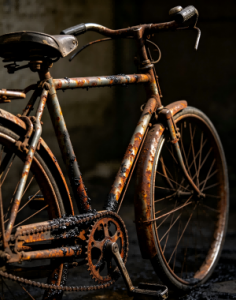
But when I ran into a project that had me stumped—restoring an old aluminum bicycle frame I’d found in a yard sale—I figured it couldn’t hurt to give it a shot.
And honestly, I’m glad I did, because laser cleaning is now my go-to method for tackling all things aluminum.
2. The Laser Cleaning Process
A Fairly Simple and Safe Process
1. Can laser safely clean aluminum?
Yes. Because aluminum absorbs specific laser wavelengths much more strongly than its oxide or coating layers, the cleaning process automatically stops at the base material, causing no thermal damage, scratches, or dimensional changes. Operators only need to set scan paths and energy parameters to achieve uniform cleaning over large areas in seconds.
2. What contaminants can be removed, such as oxide layers, oil, paint, or coatings?
Laser cleaning effectively removes a wide range of contaminants from aluminum surfaces, including natural and anodized oxide layers, industrial oils (e.g., stamping oil, lubricants), various paints (acrylic, epoxy, etc.), and composite coating systems. It can also clean dust, particles, and welding residues.
3. Does laser cleaning cause discoloration, melting, or surface damage to aluminum?
Under proper parameter control, no. Unlike harsh chemical or abrasive methods, laser cleaning is selective and gentle. Overly high energy or wrong pulse settings may cause surface melting or discoloration, but with optimized parameters (pulsed or continuous-wave lasers) and sample testing, the aluminum substrate remains intact, undamaged, and free of thermal distortion.
Compared to traditional methods, this approach eliminates hazardous waste and dust while greatly reducing operational risks and labor intensity. As a result, it is widely regarded as a fast and safe solution for industries such as aerospace, automotive manufacturing, and pre-welding surface preparation.
While repairing my aluminum bicycle, I verified that laser cleaning is indeed a simple and safe method.
3. Laser Cleaning Aluminum Bike Frame
Laser Cleaning Experience with an Aluminum Bike Frame
Let’s talk about the bike frame.
I’m sure some of you know the feeling: you spot an old, dusty bike at a yard sale, and it’s one of those moments where you know it could be beautiful again, with just a little TLC.
This particular bike was made of aluminum—light, sleek, and just waiting for a fresh coat of paint and a bit of polish.
But there was one problem: the surface was covered in layers of oxidation and grime.
Scrubbing it with steel wool or using abrasive chemicals didn’t seem like it would do the job without scratching the frame, and honestly, I didn’t want to risk damaging it.
A friend who works in automotive restoration suggested I try laser cleaning, since he’d used it on car parts before and had been impressed by the results.
At first, I was a little skeptical.
But hey, what did I have to lose?
I found a local service that offered it, and within a couple of days, I dropped off the frame, eager to see how this “laser magic” would work.
When I came back to pick it up, I almost didn’t recognize it.
The bike frame was shiny, smooth, and—most importantly—clean.
All the oxidation had been carefully removed, leaving behind the aluminum in its pure, natural state.
And there was no damage.
No sanding marks, no rough patches.
It looked almost like new, without the hassle of buffing or polishing.
-236x300.png)
Aluminum Laser Cleaning
Test Your Aluminum Sample
4. Why Laser Cleaning Aluminum is So Effective
Precision and Control
One of the things that really impressed me about laser cleaning was how precise it was.
Traditional abrasive methods always ran the risk of damaging the aluminum, leaving scratches or gouges.
With laser cleaning, the technician was able to remove just the oxidation and dirt, without affecting the underlying surface at all.
The bike frame looked cleaner than it had in years, and I didn’t have to worry about ruining it.
No Mess, No Chemicals
I’ll be the first to admit that I’ve used some pretty strong chemicals in the past to clean aluminum (who hasn’t?), and sometimes I’ve been more than a little concerned about the fumes or the environmental impact.
With laser cleaning, there’s no need for harsh chemicals or toxic solvents.
The process is completely dry, and the only “waste” is a bit of vaporized material that’s easy to dispose of.
As someone who values both efficiency and sustainability, that’s a major win in my book.
It Works Fast
Let’s face it—restoring or cleaning aluminum can take a while.
Whether you’re sanding, scrubbing, or soaking it in chemicals, it’s a time-consuming process.
Laser cleaning, on the other hand, is fast.
The entire process on my bike frame took under 30 minutes, and the results were instant.
For those of us with limited time or patience, this is a huge advantage.
Perfect for Sensitive Projects
Aluminum can be a bit delicate—too much scrubbing or the wrong tools can leave permanent marks.
Laser cleaning is ideal for delicate projects where you need to preserve the integrity of the material.
For example, I used it on a set of old aluminum rims I had lying around, and they came out looking fantastic—no damage, no rough spots, just a clean, smooth surface ready for refinishing.
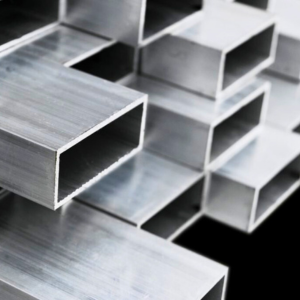
Laser Cleaning Aluminum
Eco-Friendly
Not to beat a dead horse, but the environmental benefits of laser cleaning really impressed me.
With no chemicals involved and minimal waste produced, it felt like a much cleaner, greener way to restore and maintain my aluminum projects.
It’s always nice to know that I’m not contributing to a toxic buildup in the garage or my local water supply.
Why Laser Cleaning is THE BEST
If you enjoyed this video, why not consider subscribing to our Youtube Channel?
5. What are Pulsed Laser and Continuous-Wave Laser Cleaning ?
Pulsed laser cleaning uses intermittent high-energy pulses with extremely short durations (nanoseconds, picoseconds, or even femtoseconds) and extremely high peak power. It removes contaminants through instantaneous vaporization or thermal stress peeling. The heat does not have time to conduct to the substrate, resulting in a minimal heat-affected zone and almost no damage to the material surface. In contrast, continuous-wave laser cleaning uses a stable, uninterrupted energy beam to continuously heat contaminants, causing them to melt or vaporize. The heat tends to accumulate and conduct into the substrate, which may lead to material discoloration, remelting, or increased surface roughness.
6. What Tasks Are Pulsed Laser and Continuous-Wave Laser Cleaning Suitable for, Respectively?
Pulsed laser: High peak power, short pulses, minimal heat-affected zone.
Suitable for precision cleaning and tasks requiring zero damage to the substrate, such as:
- Paint removal from aircraft skins
- Mold cleaning
- Cultural relic conservation
- Paint removal from aluminum alloys
Continuous-wave (CW) laser: Stable continuous output, high power, low cost.
Suitable for large-area, fast, and rough cleaning, such as:
- Pre-welding treatment of auto body-in-white
- Ship rust removal
- Thick paint removal from industrial parts
- However, the thermal effect is larger, which may easily cause aluminum discoloration or increased surface roughness.
7. In Which Cases Is Direct Laser Cleaning Not Recommended?
Highly reflective or transparent contaminants: Mirror-polished aluminum may reflect the laser beam and damage the equipment, or the contaminant (e.g., certain clear coats) may be transparent to the laser wavelength.
Extremely thin or heat-sensitive substrates: Thin aluminum foil, plastics, or thermally sensitive materials may deform or change properties even under low heat input.
Deep contaminants or complex geometries: Laser cleaning is line-of-sight and cannot reach deep holes, narrow gaps, internal cavities, or shadowed areas.
Cost or efficiency constraints: Manual grinding may be more economical for small batches, or the site lacks proper laser safety equipment (enclosure, goggles).
Similar absorption rates between contaminant and substrate: If the contaminant and aluminum have very close absorption coefficients for the laser wavelength, selective removal becomes difficult, and substrate damage is likely.
8. Sample Testing is Necessary when Formally Laser Cleaning Aluminum
Determine optimal laser parameters: Different aluminum alloys, surface conditions, and contaminant types/thicknesses respond differently to laser. Testing helps identify the best fluence, pulse width, frequency, scanning speed, etc.
Verify cleaning results and damage risk: Visually inspect cleanliness, and use microscopes or profilometers to check for discoloration, melting, micro-cracks, or abnormal roughness changes.
Assess cleaning efficiency: Calculate the time required per unit area to see if it meets production cycle or throughput requirements.
Compare pulsed vs continuous-wave lasers: The same workpiece can be tested with both laser types to intuitively determine which is more suitable for the specific task.
Avoid batch failures: Once the process is validated with small-sample testing, it can be scaled up to mass production, reducing scrap rates and rework costs.
Send Your Material and Contaminant Details
9. How to Select Laser Cleaning Machine
| Dimension | Recommendation |
|---|---|
| Contaminant type and thickness |
Thin oxide layers, precision paints, zero substrate damage requirement → Pulsed laser (nanosecond or picosecond) Thick paints, heavy oil, thick rust → High-power CW laser or high-pulse-energy laser |
| Cleaning area |
Large flat surfaces, production lines → CW laser with wide spot or galvanometer scanning for high efficiency Local, small areas, precision zones → Pulsed laser with small spot or handheld cleaning head |
| Production requirements |
Fast cycle time, automated integration → CW laser offers high power and speed Extreme quality requirements (e.g., aerospace) → Pulsed laser + sample testing + real-time process monitoring Limited budget → CW laser equipment is generally lower cost than pulsed laser |
| Other considerations |
On-site safety: Pulsed lasers have high peak power and require stricter safety measures Workpiece shape: Complex curved surfaces favor fiber-coupled flexible handheld cleaning heads |
Want to Know More about Laser Cleaning Aluminum?
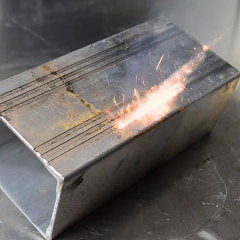
Cleaning Aluminum is Tricker than Cleaning Other Materials.
Therefore We Wrote an Article all about How to Achieve Good Cleaning Results with Aluminum.
From Settings to How to.
With Videos and Other Information, Backed with Research Articles!
Interested in Purchasing a Laser Cleaner?
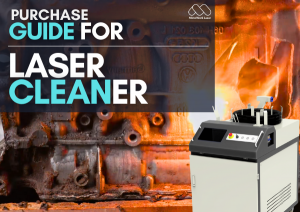
Want to get yourself a handheld laser cleaner?
Don't know about what model/ settings/ functionalities to look for?
Why not start here?
An Article we wrote just for how to pick the best laser cleaning machine for your business and application.
More Easy & Flexible Handheld Laser Cleaning
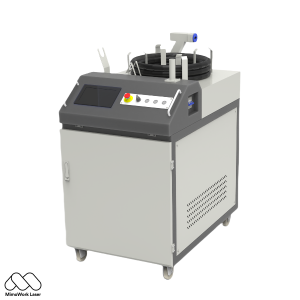
Portable and compact fiber laser cleaning machine covers four main laser components: digital control system, fiber laser source, handheld laser cleaner gun, and cooling system.
Easy operation and wide applications benefit from not only the compact machine structure and fiber laser source performance but also the flexible handheld laser gun.
Related Applications You Might be Interested:
Every Purchase Should be Well Informed
We can Help with Detailed Information and Consultation!
Post time: Dec-26-2024