
Laser Cleaning Wood
Restoring wood traditionally risks damage. Laser cleaning offers a precise solution: using controlled laser pulses to strip away paint, stains, and dirt without abrasives or chemicals.
It’s the definitive method for preserving integrity—from antique furniture to architectural woodwork—by cleaning at the level of science.
▶Key Takeaways
▷ Best For: Restoration of antique furniture, maintenance of architectural woodwork, cleaning of artworks, and any fine woodworking project requiring non-damaging removal of paint, varnish, or stains.
▷Key Advantage: Non-contact, precision cleaning that removes only surface contaminants without damaging the underlying wood, perfectly preserving its original grain and structure.
▷ROI Factor: Significantly reduces time and labor costs, eliminates the need for chemical purchases and disposal, and adds higher value to premium restoration projects.
▷Peace of Mind: A clean, eco-friendly process that eliminates worries about chemical hazards or irreversible damage from physical abrasion on valuable wood.
Table of Contents:
What Is Pulsed Laser Cleaning?
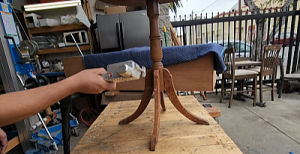
Pulsed Laser Cleaner Stripping Oxide Layer From Wooden Stand
Pulsed Laser Cleaning is a targeted technique that uses brief, high-energy light pulses to clean surfaces. Its principle involves:
- Periodic Energy Delivery: Lasers store and release energy in rapid pulses.
- High-Intensity Impact: Each pulse achieves a high energy density.
- Selective Removal: This energy ablates contaminants via sublimation, vaporization, or concussive detachment, leaving the substrate undamaged.
Compared to Continuous Wave (CW) Lasers:
Versatility:
Pulsed lasers can be used to clean a wide range of materials, including metals, ceramics, and composites.
By adjusting parameters like pulse energy, duration, and repetition rate.
Better Heat Control:
Pulsed lasers can better control the heat input to the substrate, preventing excessive heating or micro-melting that could damage the underlying material.
This makes pulsed lasers well-suited for cleaning delicate or heat-sensitive surfaces.
Pulsed laser cleaning is commonly used in applications such as rust, paint, oil, and oxide layer removal from metal surfaces.
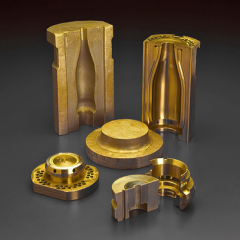
It is particularly effective for precision cleaning tasks where tight control over the cleaning process is required, such as mold cleaning.
Do Laser Cleaners Work on Wood?
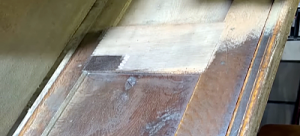
Laser Cleaning Paint from Wooden Door
Yes, laser cleaners can be highly effective for cleaning and restoring wood surfaces.
Laser cleaning is a non-contact, precise method,for removing unwanted coatings, stains, and contaminants from wood
Without damaging the underlying material.
The laser beam is directed at the wood surface,where the contaminants absorb the laser energy.
This causes the contaminants to vaporize and detach from the wood,
Leaving the wood surface clean and undamaged.
For Stripping Paint, Varnish and Stains from Wood:
Laser cleaning is particularly useful for removing paint, varnish, and stains from wood,
including on delicate or intricate woodwork like antique furniture or wooden sculptures.
The laser can be precisely adjusted to target only the unwanted layers without harming the wood itself.
This makes laser cleaning a superior alternative to traditional methods
like sanding or chemical stripping,which can be more labor-intensive and risk damaging the wood.
For Removing Dirt, Grease and Other Contaminants:
In addition to paint and stain removal,
Laser cleaning can also effectively remove dirt, grease, and other surface contaminants from wood,
Restoring its natural color and grain.
The process is also useful for cleaning and purifying wooden structures and artifacts,
Helping to preserve cultural heritage.
Laser Cleaning is Highly Efficient to Clean & Restore Wood Surface
With the Right Setup and Precautions
Does Laser Wood Stripping Work?
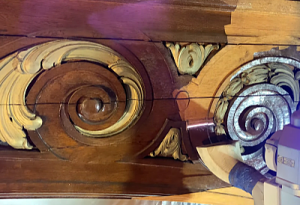
Laser Cleaning Stripping Paint from Wooden Frame
Yes, laser wood stripping is an effective and efficient method for removing paint, varnish, and other coatings from wood surfaces.
Compared to traditional methods like sanding or chemical stripping,laser wood cleaning is significantly faster and more efficient.
It can remove coatings from large areas
In a fraction of the time required by manual techniques.
Versatility Through Adjustable Power & Focus:
The laser's adjustable power and focus settings
Make it versatile enough to handle different wood types and coating thicknesses.
This allows for customized cleaning to suit the specific project needs.
Environmentally Friendly with Less Mess:
Laser wood stripping is also a more environmentally friendly option,
As it does not require the use of harsh chemicals.
This eliminates the need for hazardous waste disposal
And reduces the impact on the surrounding environment.
What Types of Wood Can be Laser Cleaned?
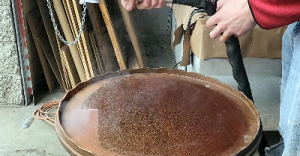
Laser Cleaning Wooden Table for Restoration
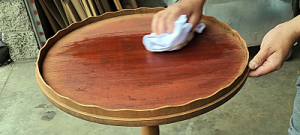
Laser Cleaned Wooden Table
Many different types of wood can be effectively cleaned using laser technology.
The most suitable woods for laser cleaning are those that are not too dark or reflective in color.
Suitable for Laser Cleaning: Hardwood
Hardwoods like maple, oak, and cherry are excellent candidates for laser cleaning,
As their surfaces are able to absorb the laser energy
And have their dirt, grime, and stains vaporized.
Darker, denser woods like ebony and rosewood can also be laser cleaned
But may require more passes of the laser to fully remove contaminants.
Less Ideal for Laser Cleaning: Lighter Coloured & Reflective Wood
In contrast, lighter colored and more reflective woods
Like pine or laminate flooring are less ideal (But Still Cleans Effectively)
The key is finding woods that have a surface that can efficiently absorb the laser's energy
In order to vaporize the dirt and stains,
without the laser damaging or burning the underlying wood.
Why Should You Choose Laser to Clean Wood?
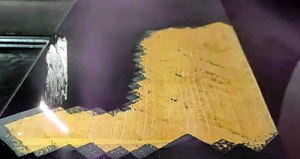
Laser Cleaning Heavy Coating From Wood
Laser cleaning is an excellent choice for cleaning wood surfaces due to its numerous advantages over traditional cleaning methods.
Here's Why you Should Choose Laser to Clean Wood
Precision and Control:
Laser cleaning allows for precise and controlled removal of unwanted coatings, such as paint, varnish, or stains, without damaging the underlying wood.
The laser can be precisely targeted to only affect the surface layer, leaving the wood itself unharmed.
Non-Abrasive Cleaning:
Unlike sanding or chemical stripping, laser cleaning is a non-contact method that does not physically abrade the wood surface.
This helps maintain the integrity and appearance of the wood, especially on delicate or antique pieces.
Versatility:
Laser cleaning systems can be adjusted to accommodate different types of wood and varying levels of contamination.
This versatility allows the technique to be used on a wide range of wood restoration and maintenance projects.
Cost-Effectiveness:
With the price tag dropping with laser cleaners on the market, the speed, precision, and reduced labor.
And material costs associated with laser cleaning definitely make it a more cost-effective solution in the long run.
What Applications Needs Laser Wood Cleaning?
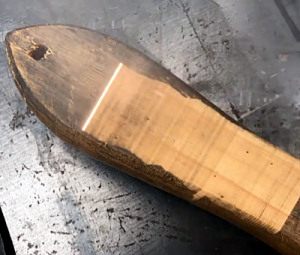
Laser Cleaning Grime From a Wooden Brush Handle
Restoration of Antique and Vintage Furniture:
Laser cleaning is an excellent method for restoring the beauty of antique and vintage wooden furniture.
It can gently remove dirt, grime, and old finishes without damaging the underlying wood surface, preserving the integrity of these valuable pieces.
Removal of Contaminants from Wood Surfaces:
Laser cleaning is effective in removing various contaminants from wood surfaces, such as oil, grease, and adhesive residues.
This makes it useful for cleaning industrial equipment, medical devices, and other applications where a clean, contaminant-free wood surface is required.
Preparation for Refinishing and Finishing:
Before applying new finishes or coatings to wooden surfaces, laser cleaning can be used to prepare the surface by removing old finishes, stains, and other impurities.
This ensures better adhesion and a more uniform appearance of the new finish.
Cleaning of Wooden Floors and Cabinetry:
Laser cleaning can be an efficient and environmentally friendly method
For cleaning and maintaining wooden floors, cabinets, and other wooden architectural elements in residential and commercial settings.
Removal of Graffiti and Unwanted Markings:
Laser cleaning can be used to remove graffiti, paint, and other unwanted markings
From wooden surfaces without causing damage to the underlying wood.
Preparation for Laser Engraving and Marking:
Laser cleaning can be used to prepare wooden surfaces for laser engraving or marking
By removing any contaminants or coatings that could interfere with the laser's performance.
Cleaning of Wooden Sculptures and Artwork:
Laser cleaning is a gentle and precise method for cleaning and restoring wooden sculptures, carvings,
And other wooden artworks without risking damage to the delicate surfaces.
Recommended Laser Cleaning Machine for Wood
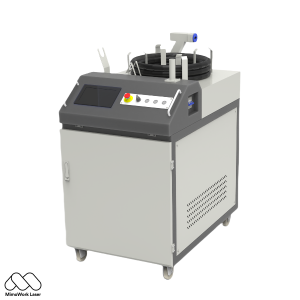
Due to the noncontinuous laser output and high peak laser power, the pulsed laser cleaner is more energy-saving and suitable for fine parts cleaning.
The adjustable pulsed laser is flexible and serviceable in rust removal, paint removal, stripping coating, and eliminating oxide and other contaminants.
Versatility Through Adjustable Power Parameter
Low Operating and Maintenance Costs
Non-Contact Cleaning Minimize Wood Damage
What is Laser Cleaning?
In 3 minutes, we will explain what laser cleaning is, how it works, and what it can clean, along with some benefits compared to sandblasting.
Laser cleaning, where the future meets the present, forever changes how we approach cleaning and restoration.
Why Laser Ablation is the Best
We Compared Laser Cleaning with Sandblasting, Chemical Cleaning, and Dry Ice Cleaning, in factors like the cost of consumables, cleaning methods, portability, learning curves, personal protective equipment, and the need for post-cleaning.
Conclusion
Laser cleaning is a precise and effective method for restoring wood. It safely removes paint, stains, and dirt without damaging the surface, offering an eco-friendly alternative to traditional sanding or chemicals. Ideal for furniture, floors, and antiques.