
Laser Cutting Dyneema Fabric
Dyneema is a trade name associated with ultra-high-molecular-weight polyethylene materials, but the supplied product may be a woven fabric, laminated composite, coated sheet, adhesive-backed material, or another construction. Cutting suitability cannot be determined from the Dyneema name alone. This page explains which material and application information must be confirmed before an existing laser-cutting record can be applied to a specific order.
Identify the Dyneema Material and Confirm Cutting Suitability
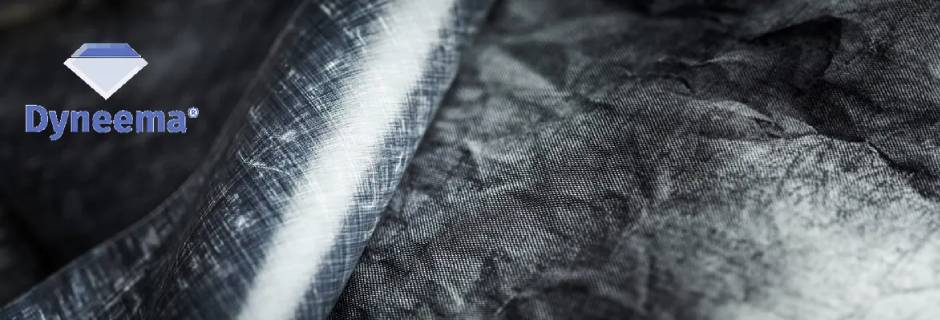
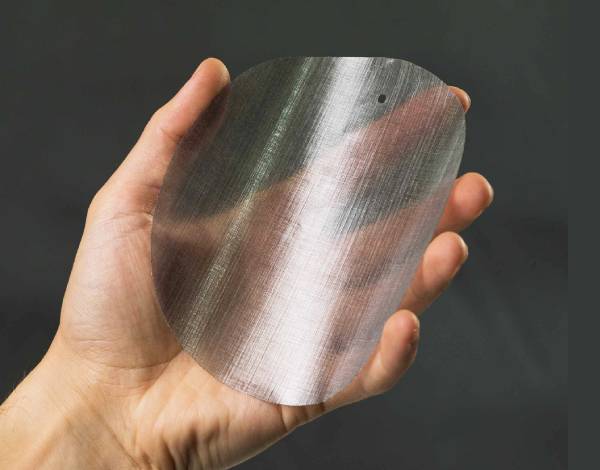
Dyneema is a trade name associated with ultra-high-molecular-weight polyethylene materials. The supplied product may be woven, laminated, coated, adhesive-backed, or combined with other layers. These differences can affect how the material responds to thermal cutting, so the Dyneema name alone does not confirm laser-cutting suitability.
Determine whether an existing approved cutting record applies by confirming the following information:
| Information to Confirm | Details |
|---|---|
| Supplier and Product Grade | Identify the exact commercial material rather than relying only on the Dyneema name. |
| Material Construction | Confirm whether it is woven fabric, nonwoven material, laminate or composite. |
| Additional Layers | Identify films, coatings, adhesives, backings and other combined materials. |
| Material Format | Confirm thickness, areal weight, number of layers and roll or sheet format. |
| Required Result | Define the cutting shape, dimensions, tolerance and acceptable edge condition. |
| Final Application | Identify any strength, protective, bonding or other functional requirements that must remain after cutting. |
Suitability status: If no approved cutting record exists for the exact grade and construction, laser-cutting suitability remains unverified.
Who Are We?
MimoWork Laser, an experienced laser cutting machine manufacturer in China, have a professional laser technology team to solve your problems from laser machine selection to operation and maintenance. We have been researching and developing various laser machines for different materials and applications. Check out our laser cutting machines list to get an overview.
Cutting Results to Confirm
Cut Completion and Dimensional Result
Required results may include complete separation, dimensional accuracy, acceptable edge condition, and compatibility with the next production step. For laminated or coated Dyneema materials, existing records should also confirm whether cutting causes melting, edge thickening, delamination, adhesive residue, smoke deposition, or changes to the required material function.
Edge Condition
Review the recorded edge for loose fibers, melting, thickening, hardening, discoloration, residue, or an uneven cut line. An acceptable edge for a non-structural cover may not be acceptable for a component that will be sewn, bonded, folded, or placed under load.
Laminated and Coated Construction
For laminated or coated Dyneema materials, confirm whether heat affected the surface film, coating, adhesive, backing, or bond between layers. Relevant observations may include delamination, film shrinkage, exposed adhesive, edge lifting, smoke deposition, or changes in surface appearance.
Retained Material Function
Confirm which material properties must remain after cutting. Depending on the application, these may include tensile performance, tear resistance, flexibility, permeability, waterproof construction, bonding performance, or compatibility with stitching and assembly. Do not assume that a visually clean edge retains the required function.
Required results may include complete separation, dimensional accuracy, acceptable edge condition, and compatibility with the next production step. For laminated or coated Dyneema materials, existing records should also confirm whether cutting causes melting, edge thickening, delamination, adhesive residue, smoke deposition, or changes to the required material function.
Residue and Downstream Processing
Check whether the recorded process left smoke residue, melted deposits, adhesive contamination, or edge deformation that could affect sewing, bonding, coating, inspection, or final assembly. Any required cleaning or finishing should be included when assessing the suitability of the process.
Production Relevance
Processing time, material utilization, handling requirements, and post-processing needs should only be compared when the existing record matches the actual material format, part geometry, number of layers, and machine configuration. Machine travel speed alone does not represent the complete production cycle.
A Few Highlights of Laser Cutting Machine >
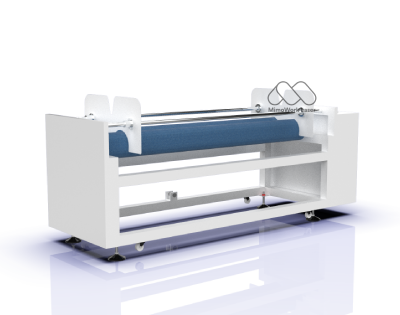
For roll materials, the combination of auto-feeder and conveyor table is an absolute advantage. It can automatically feed the material onto the working table, smoothing the whole workflow. Saving time and guaranteeing the material flat.

The fully enclosed structure of laser cutting machine is designed for some clients with higher requirements for safety. It prevent the operator from directly contact with the working area. We specially installed the acrylic window so that you can monitor the cutting condition inside.

To absorb and purify the waste fume and smoke from laser cutting. Some composite materials have chemical content, that can release the pungent odor, in this case, you need a great exhaust system.
Recommended Fabric Laser Cutter for Dyneema

• Laser Power: 100W / 150W / 300W
• Working Area: 1600mm * 1000mm
Flatbed Laser Cutter 160
Fitting the regular clothing and garment sizes, the fabric laser cutter machine has a working table of 1600mm * 1000mm. The soft roll fabric is pretty suitable for laser cutting. Except that, leather, film, felt, denim and other pieces can all be laser cut thanks to the optional working table. The steady structure is the base of production...

• Laser Power: 100W/150W/300W
• Working Area: 1800mm * 1000mm
Flatbed Laser Cutter 180
To meet more varieties of cutting requirements for fabric in different sizes, MimoWork widens the laser cutting machine to 1800mm * 1000mm. Combined with the conveyor table, roll fabric and leather can be allowed to convey and laser cutting for fashion and textiles without interruption. In addition, multi-laser heads are accessible to enhance the throughput and efficiency...

• Laser Power: 150W / 300W / 450W
• Working Area: 1600mm * 3000mm
Flatbed Laser Cutter 160L
The MimoWork Flatbed Laser Cutter 160L, characterized by the large-format working table and higher power, is widely adopted for cutting industrial fabric and functional clothing. Rack & pinion transmission and servo motor-driven devices provide steady and efficient conveying and cutting. CO2 glass laser tube and CO2 RF metal laser tube are optional...
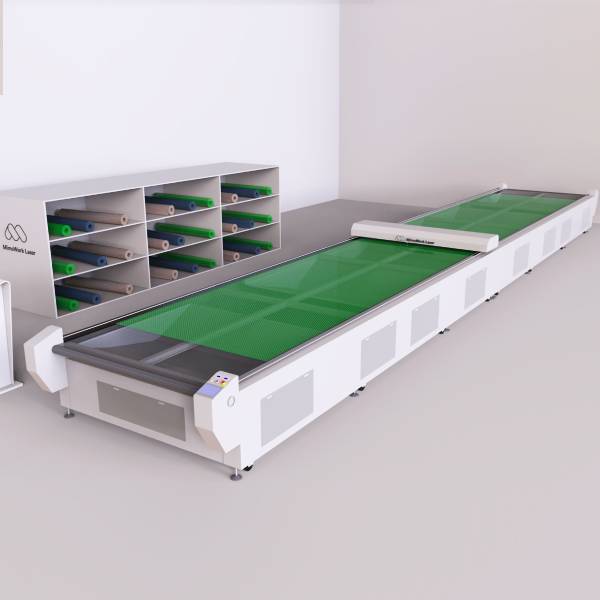
• Laser Power: 150W / 300W / 450W
• Working Area: 1500mm * 10000mm
10 Meters Industrial Laser Cutter
The Large Format Laser Cutting Machine is designed for ultra-long fabrics and textiles. With a 10-meters long and 1.5-meters wide working table, the large format laser cutter is suitable for most fabric sheets and rolls like tents, parachutes, kitesurfing, aviation carpets, advertising pelmet and signage, sailing cloth and etc. Equipped with a strong machine case and a powerful servo motor...
Other Traditional Cutting Methods
Manual Cutting: Often involves using scissors or knives, which can lead to inconsistent edges and require significant labor.
Mechanical Cutting: Uses blades or rotary tools but may struggle with precision and produce frayed edges.
Limitation
Precision Issues: Manual and mechanical methods can lack the accuracy needed for intricate designs, leading to material waste and potential product defects.
Fraying and Material Waste: Mechanical cutting can cause the fibers to fray, compromising the fabric's integrity and increasing waste.
Select One Laser Cutting Machine Suitable for Your Production
MimoWork is here to offer professional advice and suitable laser solutions !
Examples of Products Made with Laser-Cut Dyneema
Outdoor and Sporting Equipment
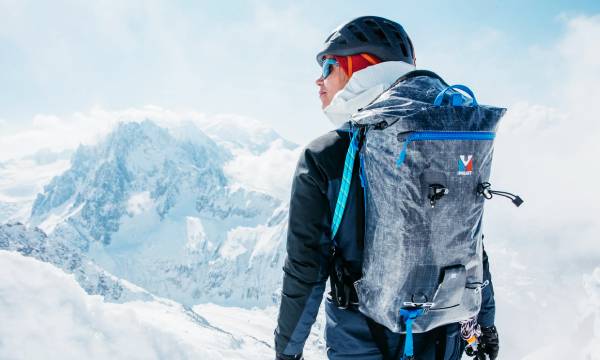
Lightweight backpacks, tents, and climbing gear benefit from Dyneema's strength and laser cutting's precision.
Personal Protective Gear
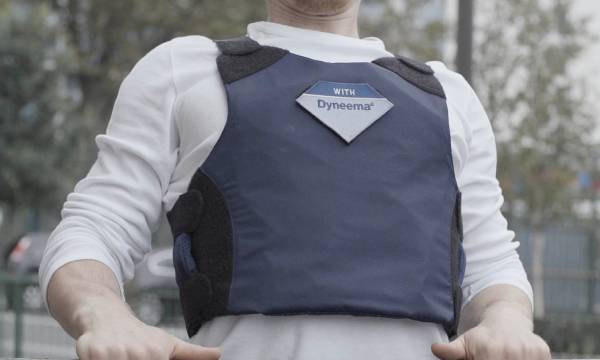
Bulletproof vests and helmets leverage Dyneema's protective qualities, with laser cutting ensuring precise and reliable shapes.
Marine and Sailing Products
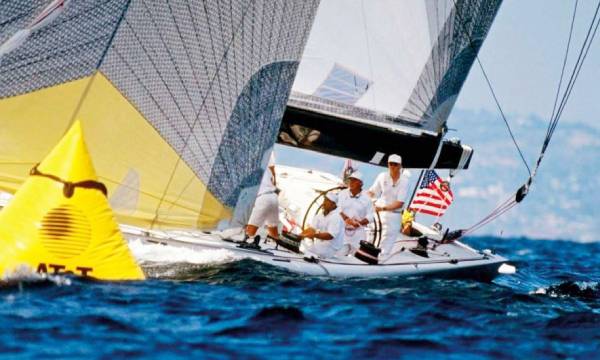
Ropes and sails made from Dyneema are durable and reliable, with laser cutting providing the necessary precision for custom designs.
Related Materials to Dyneema can be Laser Cut
Carbon Fiber Composites
Carbon fiber is a strong, lightweight material used in aerospace, automotive, and sports equipment.
Laser cutting is effective for carbon fiber, allowing for precise shapes and minimizing delamination. Proper ventilation is essential due to fumes generated during cutting.
Kevlar®
Kevlar is an aramid fiber known for its high tensile strength and thermal stability. It is widely used in bulletproof vests, helmets, and other protective gear.
While Kevlar can be laser cut, it requires careful adjustment of laser settings due to its heat resistance and potential to char at higher temperatures. The laser can provide clean edges and intricate shapes.
Nomex®
Nomex is another aramid fiber, similar to Kevlar but with added flame resistance. It is used in firefighter clothing and racing suits.
Laser cutting Nomex allows for precise shaping and edge finishing, making it suitable for protective apparel and technical applications.
Spectra® Fiber
Similar to Dyneema and X-Pac fabric, Spectra is another brand of UHMWPE fiber. It shares comparable strength and lightweight properties.
Like Dyneema, Spectra can be laser cut to achieve precise edges and prevent fraying. Laser cutting can handle its tough fibers more efficiently than traditional methods.
Vectran®
Vectran is a liquid crystal polymer known for its strength and thermal stability. It is used in ropes, cables, and high-performance textiles.
Vectran can be laser cut to achieve clean and precise edges, ensuring high performance in demanding applications.