

Fabric Cutting Method Comparison
Laser Cutting vs Die Cutting Fabric: Which Method Fits Your Production?
If you cut fabric for apparel, home textiles, sublimation products, automotive interiors, technical textiles, or custom small-batch work, the better question is: which method matches your fabric, pattern changes, order volume, edge requirements, and production workflow?
This guide compares laser cutting vs die cutting for fabric from a buyer's point of view, with a focus on practical selection rather than a generic fabric laser cutting guide.
Table of Contents:
Quick Answer
Choose die cutting if your fabric parts use the same shape again and again, the order is stable, and you already have dies that fit the job.
Choose laser cutting if your work involves complex shapes, many styles, shorter runs, quick sampling, printed or sublimated fabric alignment, or roll-fabric processing that may benefit from digital cutting and automatic feeding, depending on the confirmed machine configuration.
If you are not sure, send the actual fabric, design file, width, quantity range, and edge-quality requirement for sample cutting or machine selection advice.
How the Two Methods Work
Die cutting uses a physical die to press or cut fabric into a defined shape. Once the die is prepared and in good condition, the process can be efficient for repeated shapes and stable production. The tradeoff is that every new shape or design change may require die preparation, adjustment, or replacement.
Laser cutting uses a focused laser beam and digital cutting path. For fabric, this can support non-contact cutting, detailed contours, engraving, perforating, and in some cases printed-pattern alignment when the fabric, file, and production setup match the machine configuration. Stable repetition favors die cutting; flexible, varied, or detail-heavy fabric work often favors laser cutting evaluation.
Laser Cutting vs Die Cutting Fabric: Comparison Table
| Selection Factor | Laser Cutting Fabric | Die Cutting Fabric |
|---|---|---|
| Shape flexibility | Strong for complex contours, many SKUs, and design changes | Strong for fixed shapes once the die is ready |
| Tooling | No physical die is needed for each shape | Requires a die, which can be efficient after setup |
| Sampling | Suitable for quick sample cutting and design testing | Less convenient when each sample requires new tooling |
| Batch size | Good fit for small batches, mixed batches, and custom work | Good fit for stable, repeated runs |
| Printed fabric alignment | Can work with vision recognition in suitable applications, especially when pattern contrast or registration marks are suitable | Depends on tooling, registration, die condition, and process setup |
| Edge result | Laser heat cutting may help reduce fraying on suitable fabrics | Depends on die condition, fabric composition, coating, thickness, and cutting pressure |
| Best next step | Test the actual fabric and design | Confirm die cost, die life, and order stability |
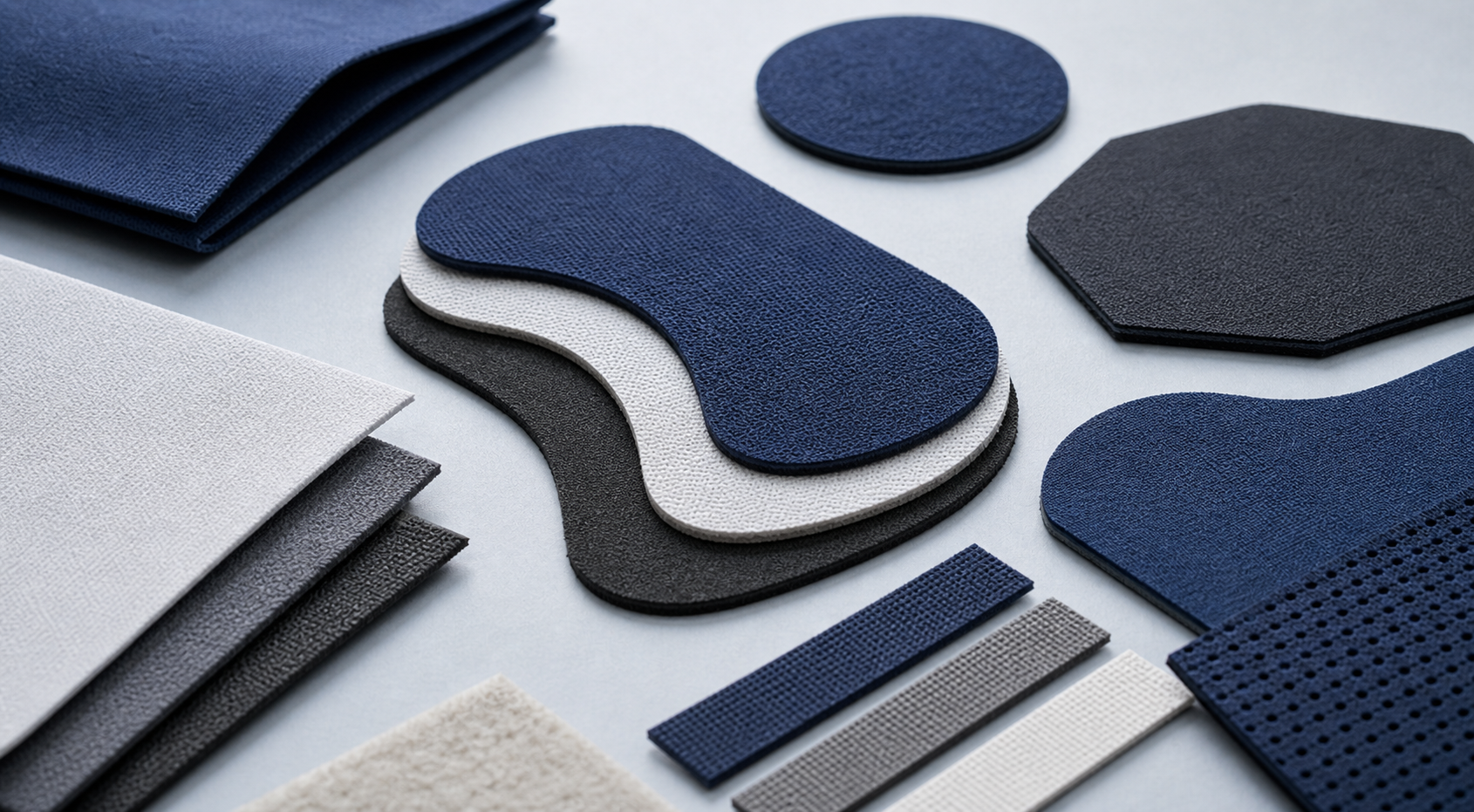
Clean edge quality is one reason fabric buyers compare laser cutting with die cutting, but the result still depends on material and setup.
Compare With Your Actual Fabric
Share your fabric type, design file, roll width or sheet size, quantity range, and edge-quality requirement. MimoWork can help review whether sample laser cutting or machine selection advice is the right next step.
When Die Cutting Still Makes Sense
Die cutting is still worth considering when the job is highly repeatable. If your factory cuts the same fabric part in the same shape for a long time, and the die already exists, die cutting may remain practical.
This is especially relevant for buyers who already have a stable product line and do not need much design flexibility. The main questions are usually die cost, die storage, die wear, changeover, fabric behavior under pressure, and whether the production volume justifies the tooling.
It is also worth separating rotary die cutting from flatbed die cutting because "die cutting" is not one single production setup. Die cutting is not outdated; it is strongest when the fabric product is stable enough to make physical tooling worthwhile.
When Laser Cutting Is the Better Direction to Evaluate
Laser cutting becomes more compelling when the business has more variation: garment sizes, decorative shapes, sublimation contour cutting, home textile patterns, automotive interiors, technical fabric processing, or custom small-batch work.
Laser cutting can reduce the friction caused by die preparation and support detailed cutting paths, small-batch production, and faster sampling cycles. For suitable fabrics, laser heat cutting may help create a clean edge and reduce fraying, but the result depends on fabric composition, thickness, coating, elasticity, color, edge-quality requirement, and cutting settings.
Fabric and Application Fit
MimoWork's fabric and textile laser cutting resources list natural and synthetic fabric examples including cotton, polyester, nylon, silk, felt, fleece, denim, linen, leather, spandex, non-woven materials, fiberglass, spacer fabric, Kevlar, aramid, GORE-TEX, insulation materials, and other textile-related materials.
Common application directions include apparel, home textiles, curtains, upholstery, technical textiles, automotive interiors, airbags, filters, air dispersion ducts, sportswear, sublimation textiles, patches, labels, flags, banners, table covers, and backdrops. These examples should not be read as a guarantee that every fabric will cut the same way.
Printed and Sublimation Fabric: Why Vision Recognition Matters
For printed fabric, sublimation textiles, patches, labels, and contour-based products, the cutting problem is not only "can the machine cut the fabric?" It is also "can the cutting path match the printed pattern?"
This is where vision recognition can be important. In suitable applications, camera and contour-recognition options help the cutting path follow the artwork instead of relying only on a simple rectangular or fixed-shape cut.
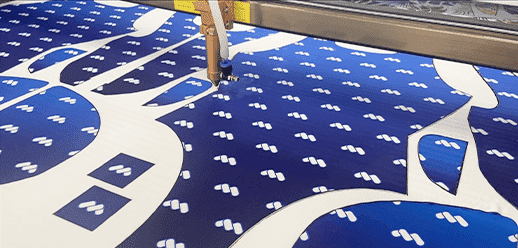
Printed or sublimated fabric shows why alignment method matters, not only cutting power.
Machine and Workflow Considerations
For fabric cutting, the machine is not just a laser source. The full workflow may include feeding, table structure, exhaust, software, material hold-down, and pattern recognition.
MimoWork's fabric-related machine pages include examples such as textile laser cutting machines, Laser Fabric Cutter 160, and Industrial Laser Cutter for Fabric 160L. Depending on the confirmed machine configuration, published options may include conveyor working tables, automatic feeding, vacuum working tables, multiple laser heads, extension tables, MimoCUT software, and working areas or power ranges that vary by model.
A useful machine-selection brief includes:
Fabric type and thickness; roll width or sheet size; printed or plain fabric; shape complexity; expected quantity range; need for automatic feeding; need for camera or contour recognition; edge-quality requirement; available workspace and exhaust conditions.
For buyers still checking process variables, MimoWork's fabric laser cutting setting guide is useful background, but the final decision should still come from testing the actual fabric.
Cost Logic: Tooling vs Flexibility
In fabric production, cost is not only the machine running cost. It also includes setup, tooling, design changes, sampling, labor, material waste, and the cost of delays.
Die cutting can be cost-effective when the order is stable and the die is already available. Laser cutting can be more attractive when the business cost comes from frequent design updates, multiple styles, short runs, sample revisions, or printed-pattern alignment. Neither method has a fixed cost advantage in every project.
A Simple Decision Framework
Use die cutting when
The die exists, the shape is fixed, orders change very little, the production run is stable, and tooling cost is already acceptable.
Evaluate laser cutting when
Shapes are complex, orders are small or mixed, styles change often, samples need to be made quickly, or printed fabric needs contour alignment.
Ask for sample testing when
The fabric has coating, elasticity, thickness, special finishing, strict edge-quality needs, fine details, smoke, odor, or ventilation questions.
How MimoWork Can Help Evaluate the Fit
MimoWork can support fabric buyers by reviewing the material, cutting file, product size, production goal, and workflow requirement. Depending on the project, the evaluation may include material testing, sample cutting, machine recommendation, vision recognition solution review, or roll-fabric automatic feeding solution discussion.
If your procurement process requires compliance documents or machine documentation, confirm the available files with the MimoWork team during evaluation. To discuss a real material or sample-cutting question, use the MimoWork contact page instead of choosing a machine only from a specification table.
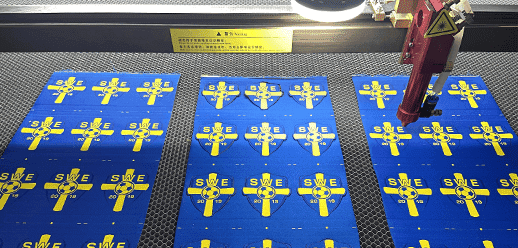
Patch, label, and applique work shows why contour detail, alignment, and edge quality should be evaluated with real fabric and artwork.
Final Recommendation
For stable, fixed-shape fabric parts with existing dies and low product change, die cutting may still be the practical choice.
For complex contours, small batches, many styles, fast sampling, printed-fabric alignment, and projects where die preparation slows down the workflow, laser cutting is worth evaluating first. The most reliable decision comes from testing the actual fabric and design.
Fabric Sample Test
Want to compare laser cutting with die cutting for your actual fabric?
Send MimoWork your material, pattern, roll width or sheet size, quantity range, and edge-quality requirement. The next useful step is sample cutting or machine selection advice based on the real job.
Post time: Jun-05-2026