

QR Code Laser Marking in Production: A Practical Guide to Efficiency and ROI
When you're running a high-volume line, QR Code Laser Marking is about one thing: making sure that code scans the first time, every time, for the next ten years. In the shop, what matters is whether the mark survives a chemical wash and whether your cycle time is dragging down your Overall Equipment Effectiveness (OEE).
Why Make the Switch?
The Limits of Traditional Labels
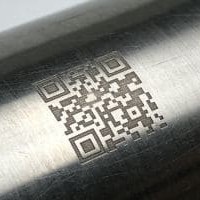
Let's look at the reality of the shop floor. Traditional inkjet codes smear, and adhesive labels peel off. In a production environment, parts are routinely subjected to chemical washes, sandblasting, or high-temperature heat treatments.
QR Code Laser Marking changes the game by physically altering the material. Instead of adding a layer of ink, the laser creates a permanent, tamper-proof mark directly into the substrate. This gives you absolute process stability—knowing that your traceability data won't vanish halfway through the supply chain.
Matching the Tool to the Job:
Choosing the Right Source
You can't use one laser to mark everything. As a rule of thumb, the laser's wavelength dictates what materials it can process effectively. Selecting the wrong wavelength is the most expensive mistake a purchaser can make.
| Laser Type | Materials with High Visibility Marks | Materials with Low Visibility Marks | Why Use It |
|---|---|---|---|
| Fiber (1064nm) | Metals & PE Resin | Copper, Cartons, Transparent Substrates, Flexible Pouches | Extremely high speed with excellent ROI for metal production lines. |
| UV (355nm) | Copper, PE Resin, Cartons, Flexible Pouches | Iron, Transparent Substrates | "Cold marking" process with zero melting and zero burning. |
| CO2 (10.6µm) | Cartons, Transparent Substrates | Iron, Copper, PE Resin, Flexible Pouches | Cost-effective and highly efficient for processing organic materials. |
The Precision of UV Lasers (Cold Marking)
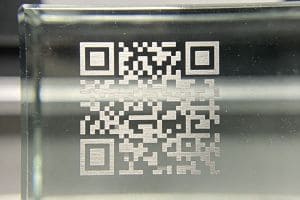
When Fiber and CO2 lasers generate too much heat for a delicate substrate, UV Lasers (355nm) are the professional choice. This is known as "Cold Marking" because the UV light breaks the molecular bonds of the material rather than melting or burning it.
- Why UV? : If you try to mark a white medical plastic or a thin electronic cable with a Fiber laser, the plastic will likely melt or char. UV lasers create a high-contrast black mark on white plastics with zero thermal damage.
A Real-World Look at Parameters
Do not trust factory presets blindly. Every batch reacts differently. Here is where we usually start:
| Material | Power (%) | Speed (mm/s) | Frequency (kHz) | Angle | Hatch / Loop | Line Space (mm) | Lens |
|---|---|---|---|---|---|---|---|
| Stainless Steel (Black Mark) | 50% | 300 | 30 | 552 | Hatch 1 / Loop 0 | 0.01 | 150 mm |
| Aluminum (White Mark) | 100% | 2000 | 55 | 90 | Hatch 1 / Loop 1 | 0.03 | 90–150 mm |
| ABS Plastic | 30% | 500 | 30 | 0 | Hatch 1 / Loop 1 | 0.03 | 210 mm |
| Brass / Copper | 100% | 200 | 45 | 0 | Hatch 1 | 0.01–0.02 | 150 mm |
| General Plastics (PE / Resin) | 10%–45% | 200–2200 | 30–60 | 0–315 | Hatch 1 / Loop 1 | 0.002–0.03 | 150–210 mm |
Recommended Parameters of Rotary Attachment for Laser Engraver for Different Cups and Bottles
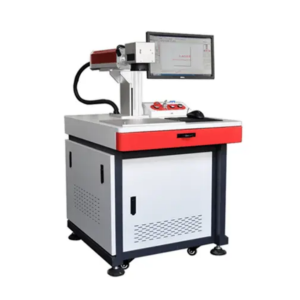
Precision QR Code Marking: Produces high-contrast, permanent QR codes for reliable product tracking and identification.
Ultra-Fast Galvo System: Enables rapid marking speeds for efficient batch production and industrial workflows.
Wide Material Compatibility: Easily marks metals, plastics, coated surfaces, and more with consistent clarity.
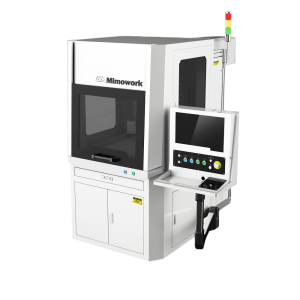
Galvo Laser 80
Precision QR Code Marking: Ideal for high-contrast, permanent codes on diverse materials.
Massive 800mm View: Perfect for high-speed marking on large formats or batch processing.
Enclosed Safety: Dust-free design enhances operator protection and workspace cleanliness.
Automated Workflow: Add a CCD Camera and Conveyor to minimize manual labor.
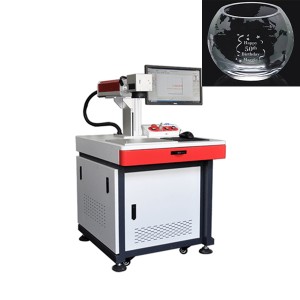
Fine QR Code Marking on Glass: High-energy UV photons create ultra-clear QR codes, barcodes, and micro graphics on glass surfaces.
Cold Laser Processing: Non-thermal marking prevents cracking or deformation, protecting delicate glassware.
Low Power, High Precision: Concentrated UV beam delivers delicate engraving with minimal energy consumption.
Benchmarking: Compare Laser Marking vs. Your Current Method
The Economic Logic: Killing the "Inkjet Tax"
For anyone managing a budget, the shift to laser marking is about stopping the constant drain of consumables.
- Calculate the ROI : In a two-shift factory, you’re likely spending thousands a year on ink and makeup. Most of our clients find that the laser pays for itself in about 12 to 14 months just by cutting those costs to zero.
- Maintenance Reality: Inkjet heads clog if they sit for a weekend. A fiber laser source is rated for 100,000 hours. Your main maintenance task becomes wiping the lens with an alcohol swab once a week.
Troubleshooting: Why Codes Fail in the Field
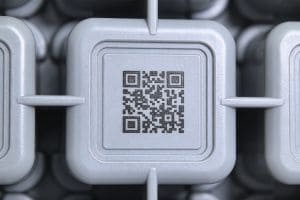
If your rejection rate starts climbing, it's usually one of two things:
- Focal Drift: If the part is even 1mm out of focus, the modules get "blurry." This is why we recommend hard-tooling your fixtures so the part sits in the exact same spot every time.
- Smoke Contamination : The dust from marking settles on the lens and blocks the beam. Keep the air assist on and the extractor humming.
FAQ
A: Yes, laser marking is fully compliant with medical device standards (ISO 13485). It creates sterile, residue-free, non-toxic marks on stainless steel, titanium, and plastics, ideal for traceability and UDI compliance.
A:Laser-marked QR codes are permanent and tamper-proof. Unlike ink printing, laser etching creates marks within the material surface, resisting wear, heat, sterilization (autoclave/ETO), and harsh cleaning chemicals.
A:We optimize laser parameters (speed, power, focus) and use quality control software to verify contrast, edge definition, and module size. Our systems include scanners to validate every code meets ISO/IEC 15415 standards.
A: Yes, with a rotary axis attachment, our laser systems mark QR codes seamlessly on curved parts like syringes, vials, and cylindrical tools. The rotation ensures uniform focus and distortion-free, fully scannable codes.
A:No. Our controlled laser marking avoids over-etching or heat discoloration that could damage the passive chromium oxide layer. We use low-heat parameters to preserve the material’s corrosion resistance.
A:Yes. On metals, we use laser annealing to create high-contrast black, white, or even colored QR codes without removing material. On plastics, we can achieve contrast through ablation or color-changing additives.
A:Prioritize ISO 13485 (medical), FDA 21 CFR Part 11 (data integrity), CE (EU safety), and ISO 11607 (packaging). These certifications ensure compliance with global medical device and marking regulations.
Plan Your Factory Layout: Get a Free Integration Consultation
Plan Your Factory Layout: Get a Free Integration Consultation
Post time: Mar-13-2026