

Laser Engraving Serial Numbers: A Guide to High-Speed Traceability
On the shop floor, we’ve seen many procurement managers initially overlook the importance of laser engraving serial numbers. It’s usually not until a label peels off in transit, or an inkjet code blurs during a quality audit, that the value of a "permanent identity" becomes crystal clear.
Where Does Laser Marking Shine?
When implementing laser engraving serial numbers, we aren’t just looking for aesthetics; we’re looking for survival in harsh environments.
High-Stress & Oily Environments:
For parts like engine blocks or aerospace bearings that face constant oil and heat, we’ve noticed that traditional ink coding rarely lasts six months. Fiber lasers, however, change the physical structure of the metal surface for a mark that lasts a lifetime.
Precision in Tight Spaces:
On miniature connectors or PCBs, space is a premium. Using MimoWork’s ±0.01 mm repetition accuracy, our engineers can fit clear, legible serials into areas smaller than a pinhead.
Compliance & Standards:
Whether you’re meeting ISO 9001 or specific industry traceability protocols, lasers can output both text and high-density 2D codes that stay compliant under scrutiny.
Technical Specs: The Physics of MimoWork Fiber Systems
To help you evaluate equipment performance, we've broken down our core specs into what they actually mean for your production line:
| Technical Spec | MimoWork Parameters | Industrial Value |
|---|---|---|
| Wavelength | 1064 nm (Fiber) | Optimized for metal absorption (Steel, Al, Titanium). |
| Power | 20W/30W/50W | 20W for surface color; 50W for deep engraving or reflective metals. |
| Cooling | Air Cooling | Lower complexity, maintenance-free, and handles shop floor fluctuations. |
| Accuracy | ± 0.01mm | Ensures identical placement and geometry for every single part. |
8000 mm/s Speed vs. Industry Benchmarks
When we talk about "marking speed", it’s crucial to distinguish between two mechanical architectures. Entry-level gantry systems (like a plotter) are limited by mechanical inertia, usually hitting a wall at 500- 1000mm/s.
That said, MimoWork uses a Digital High-speed Scan Galvanometer. Instead of moving a heavy laser head, we move micro-mirrors. This allows us to hit 8000mm/s.
• Throughput : Marking a standard 15-digit serial number takes less than 0.1 seconds. This is a 60% - 100% boost in data throughput compared to typical 3000mm/s systems.
• Heat Control : At 8000mm/s, the laser’s dwell time is so short that the Heat-Affected Zone (HAZ) is minimized. This prevents thin metal tags from warping or scorching.
• ERP Sync : Our controller’s calculation frequency matches the 8000mm/s hardware response. When synced with your ERP, it eliminates "idle time" between dynamic serial changes, keeping your line moving.
Recommended Machines for Surface Photo Etching
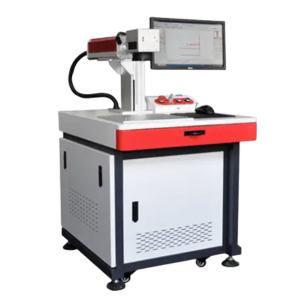
• Laser Power: 20W/30W/50W
• Working Area (W * L): 70*70mm/ 110*110mm/ 210*210mm/ 300*300mm (optional)
The fiber laser marking machine uses laser beams to make permanent marks on the surface of various materials.
Select the fiber laser marker that suits you!
We are here to give you expert advice about laser machine
"Annealing": Marking Without Piercing the "Skin"
A common concern we hear from procurement managers is: "Will engraving serial numbers cause my parts to rust?"
That’s a valid fear. If you use high-power ablation, you can weaken the corrosion resistance. For medical devices or high-grade stainless steel, we recommend the Annealing process.
Essentially, we control the energy density so the metal doesn't vaporize; instead, it "re-crystallizes" on the surface. Think of it like a tattoo that sits perfectly under the skin without breaking the protective barrier. The result is a smooth, black serial number that passes rigorous salt spray tests and stays compliant with ISO 11553-1 safety and quality standards.
ROI Analysis: Calculating the Long-Term Cost
Don’t just look at the price tag. We help our clients calculate the "hidden savings" of a laser engraving serial numbers solution:
• Zero Consumables: You can forget about the thousands of dollars spent annually on ink and solvents.
• Maintenance-Free: Our fiber sources have a theoretical lifespan of 100,000 hours. Since it’s air-cooled, you don't have to worry about water leaks or freezing in the winter.
• Digital Accuracy: Our system connects directly to your Excel or ERP. Human error in re-typing a code can scrap an entire batch; an automated system brings that error rate down to zero.
Shop Floor Q&A (FAQ)
A: When you mark at 8000 mm/s, the laser's "dwell time" on the material is extremely short. The job is done before the heat has a chance to spread. This "cold processing" effect is exactly why it’s perfect for thin tags.
A: In the B2B world, the best maintenance is no maintenance. Since there’s no ink to clog or pins to dull, your only real "consumable" is electricity. Occasionally, after a few years, you might want to replace a protective window , but that’s about it. It’s a boring machine to maintain—which is exactly what you want on a production line.
A: It depends on your material. For standard stainless tags, 20W is plenty. But if you’re tackling "stubborn" reflective materials like aluminum or copper, or if you need to squeeze every millisecond out of your cycle time, the extra "muscle" of a 50W source is a smarter investment.
Want to see the results on your own parts?
Rather than taking our word for it, send us your actual workpieces. Our engineers will run a live test and provide a detailed cycle time report, so you know exactly what to expect before you sign the PO.
Want to see the results on your own parts?
Rather than taking our word for it, send us your actual workpieces. Our engineers will run a live test and provide a detailed cycle time report, so you know exactly what to expect before you sign the PO.
Ready to optimize your traceability?
Talk to Our Laser Experts and Find The Right Solution for Your Production.
Post time: Mar-02-2026