

Laserbeschrifter for Plastic – Fiber Laser Marking for Industrial Plastics
Introduction
Fiber laserbeschrifter have become the industrial standard for laserbeschriftung kunststoff, especially when working with dark engineering plastics. With exceptional marking contrast, long operating life, and suitability for automated production lines, fiber lasers deliver reliable performance for demanding manufacturing environments.
Although fiber lasers are ideal for most engineering plastics, it is important to note that certain transparent or brightly colored plastics—often used in decorative or seasonal products—respond better to CO₂ lasers. This ensures you can always select the optimal marking method for your material.
Why Choose Fiber Laserbeschrifter for Plastic Marking?
Fiber lasers offer several benefits for modern plastic marking:
High Precision for Engineering Plastics
Fiber lasers operate at a 1064 nm wavelength, which is strongly absorbed by materials such as ABS, PA, PBT, and reinforced engineering plastics. This results in clear, permanent, and high-contrast marks suitable for industrial identification.
Fast Marking for Automated Production
With high beam quality and rapid scanning speed, fiber laserbeschrifter are ideal for mass production and integration into automated lines, ensuring low cycle times and consistent output.
Durable and Low-Maintenance
The solid-state laser source offers long service life and stable 24/7 operation with minimal maintenance—critical for manufacturing environments.
Suitable for Small Batch and Seasonal Orders
Beyond industrial traceability, fiber lasers also serve small customization needs—such as marking dark ABS ornaments or serialized holiday components—without sacrificing precision or speed.
Cut & Engrave Acrylic Tutorial | CO2 Laser Machine
This video demonstrates how to cleanly cut and precisely engrave acrylic plastic (plexiglass) using a laser cutter. It covers practical tips for improving edge quality, reducing burn marks, and achieving high-detail laser engraving on plastic materials. The video also showcases common products made from acrylic and other plastics—such as decorative displays, acrylic keychains, signage, and hanging ornaments—helping viewers understand the wide possibilities of plastic laser cutting and engraving.
Material Compatibility (Fiber as Main, CO₂ as Supplement)

ABS, PA, PBT, POM & Specialty Plastics Overview
▶Materials Best Suited for Fiber Laserbeschriftung Kunststoff
Industrial housings, connectors, dark holiday ornaments
Automotive and machinery parts
Electrical components and engineering fittings
Wear-resistant parts
High-strength and reinforced applications
Optimized for laser marking performance
Fiber lasers achieve strong contrast, crisp edges, and excellent durability on these materials.
▶When to Use CO₂ Lasers Instead
For certain transparent or brightly colored plastics commonly used in decorative applications, CO₂ lasers produce better absorption and marking quality. This applies to:
• PMMA / Acrylic (e.g., clear Christmas snowflakes)
• PET (transparent packaging elements)
• PC (colored decorative panels)
• PP (light-colored ornaments)
Short industrial note:
If your Christmas or decorative products involve clear or lightly colored plastics, CO₂ marking may be the preferred solution due to its 10.6 μm wavelength absorption characteristics.
Applications in Industrial and Seasonal Production
Industrial Applications
• Product serial numbers
• Manufacturing traceability
• Barcodes, data matrix, and QR codes
• Safety labels and compliance identification
• OEM part marking for automotive and electronics
Seasonal / Christmas Applications (Fiber-Compatible Plastics Only)
• Marking names or serials on dark ABS ornaments
• Customized plastic gift components
• Engraving logos on engineering-grade holiday accessories
• Coding small-batch seasonal production runs
Fiber lasers ensure precision without affecting dimensional stability—critical for both industrial products and premium seasonal items.
Features of Our Fiber Laserbeschrifter
| Feature | Description |
|---|---|
| High Marking Precision | Clean, sharp contrast on dark engineering plastics. |
| Fast Processing | Ideal for automated and high-volume production. |
| Robust Laser Source | Long lifespan and stable 24/7 operation. |
| Industrial Software | Supports serials, QR codes, logos, and basic decorative graphics. |
| Easy Integration | Compatible with conveyors, robotic arms, and production lines. |
FAQs
Fiber lasers work best on ABS, PA, PBT, POM, and filled engineering plastics. These materials absorb 1064 nm wavelength efficiently, producing high-contrast, permanent marks.
Yes—provided they are made from dark or pigmented engineering plastics such as ABS or PA. For transparent or brightly colored seasonal ornaments, CO₂ lasers often deliver better results.
No. Fiber lasers operate with precise, localized energy that does not warp, melt, or deform engineering plastics when used with proper parameters.
Fiber laserbeschrifter achieve extremely high speeds and are suitable for continuous industrial production, often completing complex marks within milliseconds.
Absolutely. Fiber lasers support text, barcodes, QR codes, data matrix, serial numbering, and simple decorative patterns—ideal for both industrial and occasional seasonal needs.
Recommend Machines
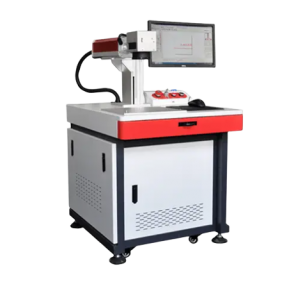
| Working Area (W *L) | 70*70mm, 110*110mm, 175*175mm, 200*200mm (optional) |
| Laser Source | Fiber Lasers |
| Laser Power | 20W/30W/50W |
| Max Speed | 8000mm/s |
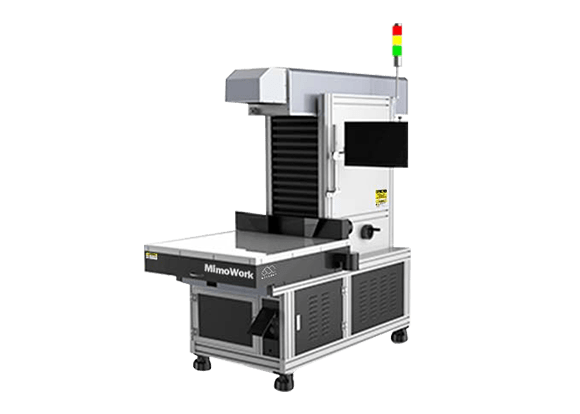
| Working Area (W * L) | 400mm * 400mm (15.7” * 15.7”) |
| Laser Source | CO2 RF Metal Laser Tube |
| Laser Power | 180W/250W/500W |
| Max Marking Speed | 1~10,000mm/s |
Not Sure Whether Fiber or CO₂ Is Right for Your Materials? Contact Us to Compare Options.
You may be interested in
If You Want to Learn More about Fiber Marking and CO₂ Marking Machines?
Post time: Dec-10-2025