

Best Laser Engraver for Golf Clubs:20W, 30W, or 50W Fiber?
Why Fiber Lasers Reign Supreme for Golf Club Engraving
The Nightmare of Diode/CO₂ with Marking Spray
Many users report the same frustration: spray, wait, engrave, scrub—only to watch the mark flake off after a few rounds of golf. Sand and impact from bunker shots quickly wear away the surface layer. Marking sprays like CerMark only sinter a pigment coating onto the metal. They don't alter the metal itself, so they can't survive the repeated abuse of club-on-ball impact and abrasive sand.
Why UV Laser Is Not Recommended for Golf Club Engraving
UV lasers (355nm) are excellent for fine marking on heat-sensitive materials like golf ball covers, but they are not the ideal choice for golf club engraving for several reasons:
- Low Power: UV lasers typically operate at 3W-10W, which is insufficient for deep, durable marking on metal surfaces.
- Slow Speed: The low power output results in slow engraving speeds, making them inefficient for production environments.
- High Cost: UV laser systems are significantly more expensive than fiber lasers, with higher maintenance costs and shorter component lifespans.
- Shallow Marking: UV lasers remove material through cold ablation, producing shallow marks that may not withstand the abrasive environment of golf play.
Fiber Laser: Direct Vaporization & Black Annealing
Fiber lasers (1064nm) are directly absorbed by golf club metals—stainless steel, carbon steel, and titanium. They work through two durable mechanisms:
- Deep Engraving: Vaporizes the metal surface to create a recessed, permanent mark.
- Black Annealing: Oxidizes the metal to produce a durable, high-contrast black mark that won't fade or wear off.
Unlike spray-based methods, fiber laser markings are permanent, require no coatings, and withstand thousands of swings. That's why fiber lasers are the only choice for professional golf club engraving.
20W vs. 30W vs. 50W Fiber Laser: Which Power Level Is Best for Golf Clubs?
Different power levels suit different business scenarios and engraving needs.
| Power | Best For | Engraving Characteristics |
|---|---|---|
| 20W | Hobbyists, small studios, occasional orders | Surface marking, logos, text; fast speed, high precision |
| 30W | Professional studios, semi-batch production | Balanced depth and speed between 20W and 50W; best value |
| 50W | Commercial production, deep engraving, high efficiency | Deep engraving, color marking (with MOPA); highest productivity |
Selection Guide: For occasional engraving, 20W is sufficient. For taking custom orders, 30W offers the best value. For efficiency, deep engraving, and commercial production, go with 50W.
If you want a more detailed understanding of fiber laser marking
Crucial Machine Specs to Check Before Buying a Laser Engraver for Golf Clubs
1. Galvo Scanner Head: The Core of Speed and Precision
Always choose a galvo scanner fiber laser marker, which uses high-speed mirrors to steer the beam at speeds up to 7,000 mm/s—engraving a logo takes only seconds to minutes. Never buy a heavy gantry-type fiber laser, which is slower, less accurate, and unsuitable for fine, three-dimensional metal engraving like golf clubs.
Reference: Mainstream galvo systems typically achieve scanning speeds of 2,000-7,000 mm/s, meeting both efficiency and precision requirements for club engraving.
2. MOPA vs. Standard Q-Switched: Functionality and Capability
This configuration determines the upper limit of engraving quality:
- Standard Q-Switched: Best value. Excels at deep metal ablation, meeting 90% of golf club engraving needs (logos, text, serial numbers). For stainless steel, carbon steel, and other common materials, Q-switched lasers handle most marking tasks effectively.
- MOPA Fiber Laser: Advanced choice. Its key advantage is adjustable pulse width (typically 2-500ns), allowing flexible tuning of laser-material interaction. Beyond deep engraving, it can produce rich, vibrant colors on titanium putters and achieve clean black marking on stainless steel without scorched edges or burrs—ideal for users seeking premium visual quality.
Reference: MOPA lasers are known for their adjustable pulse width, high peak power, and excellent shallow-layer processing capability, particularly suited for applications demanding minimal heat-affected zones and superior surface quality.
3. Field Lens (Focal Length): Energy Density Matters
The field lens determines the engraving area, but bigger is not always better:
- Recommended: 110×110 mm or 150×150 mm field lenses. These strike the optimal balance between work area and energy density, covering typical club head sizes while maintaining sufficient power for deep engraving.
- Avoid: 300×300 mm or larger field lenses. A larger lens spreads the laser beam more widely, significantly reducing energy density per unit area. Deep engraving capability on hard metals drops sharply—marks become shallow, gray, or may not appear at all on hard alloys.
Reference: Different field lenses have significant variations in focal depth and spot size. Choosing an oversized lens sacrifices engraving quality. Selection should be based on actual workpiece dimensions and required engraving depth.
4. Software & Control System: LightBurn Compatibility Is Essential
LightBurn is widely recognized as offering the best balance of usability and functionality among laser software platforms. Most fiber lasers (especially galvo markers) support LightBurn's universal fiber configuration, ensuring:
- Smooth import of vector files (SVG, AI, DXF)
- Fine adjustment of power, speed, frequency, fill spacing, and other parameters
- Efficient array nesting and parameter reuse for batch production
Reference: LightBurn has become a mainstream choice in laser processing, with continuous updates and broad hardware support making it a key consideration for users.
Essential Accessories & Jigs Needed for Golf Club Engraving
| Accessory | Purpose |
|---|---|
| Rotary Axis | Secures the club and enables 360° rotary engraving—essential for curved surfaces |
| Dedicated Club Jig | Adapts to different club head shapes and brands for stable clamping |
| Focus Tool | Enables quick, accurate focusing for crisp engravings |
| Alcohol Cleaning Kit | Removes oils and contaminants from the club surface before engraving |
| Fume Extraction System | Metal engraving produces smoke and dust—proper extraction is required |
The Business Potential of Golf Club Engraving
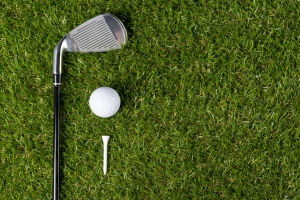
Golf club personalization is a high-margin niche market with significant return on investment potential.
Service Types and Revenue Potential
| Service Type | Revenue Tier |
|---|---|
| Simple Logo/Text Engraving | Entry-level revenue; ideal for fast turnaround |
| Custom Pattern/Wedge Design | Mid-tier revenue; reflects design value |
| Face Texture Restoration + Engraving | High-tier revenue; combines functionality with aesthetics |
| Full Set Customization | High-tier revenue; project-based pricing |
| High-End Custom Putter | Premium-tier revenue; high value per piece |
Target Customer Segments
- Individual Golfers: Personalized names, initials, lucky numbers
- Corporate Gifts: Company logos, team branding
- Tournaments & Events: Champion engravings, commemorative patterns, annual event awards
- Golf Clubs: Member-exclusive equipment, limited edition custom sets
Startup Costs and Payback Period
The initial investment includes a fiber laser marking machine, rotary axis fixture, and fume extraction system. With the equipment's high efficiency and minimal consumable costs, the payback period is typically reasonable under consistent order volume—making it a predictable long-term investment.
Core Competitive Advantages
- One-time equipment investment with near-zero consumable costs
- Moderate learning curve with user-friendly software
- Stable market demand with high repeat customer rate (club upgrades, gifts, events)
Golf club engraving is not just a technical craft—it's a business that connects sports, fashion, and personal expression. Its asset-light, high-value-add nature makes it one of the most attractive entry points in the laser processing industry.
Creative Golf Club Engraving Ideas
- Face Texture Engraving: Micro-textures on the club face for improved spin and control in wet conditions
- 3D Relief Logos: Multi-pass engraving to create raised logos on the club head
- Color Annealing Marking: On titanium club heads, adjusting MOPA laser parameters produces gold, blue, and other colored marks
- National Flag Patterns: Engrave flags, team emblems, and other designs on club heads
- Knurling Texture: Engrave decorative knurling effects on club heads or shafts
- Commemorative Text: Special dates, tournament wins, or quotes engraved on the club head back
Recommended Fiber Lasers for Golf Club Engraving
| Advantage Dimension | Specific Advantage | Detailed Description |
|---|---|---|
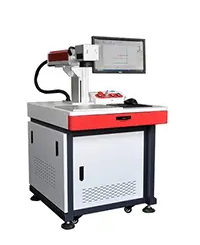
| Quality & Precision | Ultra-high precision | Repeatability down to 0.01mm for clear fine text, smooth patterns, and QR codes. |
| Application (Golf) | Golf ball & accessories customization | Golf balls: lonumbers, names, branding. |
| Application (Other) | Versatile across industries | Precision marking on electronics, hardware, automotive, medical, jewelry, nameplates, and more. |
| Strong Applicability | Flexible & adaptable | Adjustable worktable and laser head fit various workpiece sizes and shapes. |
FAQ
A: No. Laser engraving removes only an extremely thin surface layer (typically 0.01-0.05mm) and does not alter the overall structural strength or weight distribution of the club head. Fiber lasers precisely control engraving depth to ensure swing weight and performance remain unaffected. For face texture engraving, it can actually improve friction and control in wet conditions.
A:
Engraving time depends on design complexity and laser power:
| Engraving Content | Typical Time |
|---|---|
| Simple Logo/Text | 30 seconds – 2 minutes |
| Complex Pattern/Relief | 2 – 5 minutes |
| Deep Engraving | 5 – 10 minutes |
Actual time varies by equipment power and parameter settings.
A: Depending on the material and engraving method:
- Stainless Steel Clubs: No additional treatment needed; the exposed metal is inherently corrosion-resistant
- Carbon Steel Clubs: Apply a thin layer of anti-rust oil or protective coating after engraving, as the engraving removes the original protective layer
- Black Annealing Marks: The laser-generated oxide layer provides some inherent protection
A:
Yes. Fiber lasers (1064nm wavelength) can effectively process most golf club materials: 17-4 stainless steel, 304 stainless steel, forged carbon steel, 8620 carbon steel, titanium alloys, aluminum alloys, and more. Note:
- Chrome-Plated Clubs: Results depend on plating thickness; parameter adjustments may be needed
- Coated Clubs: Some coated clubs require testing to determine if the laser produces undesirable effects on the coating
Related Video
How to use EZCAD Software | Fiber Laser Marking | MimoWork Laser
Fiber laser marking machines leverage the natural advantage of their 1064nm wavelength, which is efficiently absorbed by metals. This means you can achieve permanent, high-contrast marks on stainless steel, aluminum, copper, titanium, and other metals without any marking spray or coating—all you need is basic software skills.
This video will walk you through the software workflow of a fiber laser marking machine: from importing design files, setting marking parameters (power, speed, frequency, fill spacing), to precise focusing and starting the marking process—no consumables required.
Whether you need to add serial numbers to products, customize logos on metal gifts, or expand your metal processing business, a fiber laser marking machine is the most efficient and cost-effective solution.
Do you have any other questions about laser engraving golf clubs?
Post time: Jul-24-2026