

Laser Cut Acoustic Panels:
A Complete Guide to CO₂ Laser Cutting
What Are Laser Cut Acoustic Panels?
Laser cut acoustic panels are sound-absorbing wall or ceiling panels made with precision-cut patterns. They are designed to reduce echo, improve acoustic performance, and enhance the visual appearance of commercial interiors.
These panels are widely used in offices, hotels, restaurants, schools, studios, and conference spaces where both sound control and aesthetics matter.
In the past, acoustic panels were treated as purely functional products. Today, that has changed. Architects and designers now expect acoustic wall panels to deliver both performance and visual impact.
As a result, features like geometric perforation, custom branding, decorative feature walls, and halftone acoustic panels have become standard in modern interior projects.
CO₂ laser cutting is the technology that makes this level of customization practical in production.
Featured Snippet Definition
Laser cut acoustic panels are precision-cut sound-absorbing panels used in commercial interiors to reduce noise, control echo, and add decorative value. CO₂ laser cutting is ideal for materials such as PET felt, plywood, and MDF.
Why CO₂ Laser Cutting Is the Right Choice for Acoustic Panels
Most acoustic panel materials are non-metallic, including PET felt, birch plywood, MDF, and foam composites. These materials are highly compatible with CO₂ laser cutting acoustic panels processes.
A CO₂ laser operates at a wavelength that is efficiently absorbed by organic and polymer-based materials. This results in:
• Clean and consistent cuts
• Minimal mechanical stress
• High repeatability
• Strong edge definition
Unlike fiber lasers, which are optimized for metal processing, CO₂ lasers are specifically suited for non-metal materials. For acoustic panel manufacturing, this is not just a preference—it is the correct technical solution.
Key Advantages
No tooling required
Switch designs instantly by changing files.
High precision
Ideal for fine details, logos, and perforation patterns.
Flexible production
From one prototype to large production runs on the same system.
Best Materials for Laser Cut Acoustic Panels
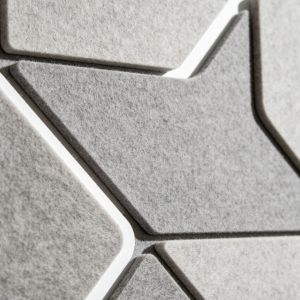
1. PET Felt Panels
PET felt is one of the most common materials used in acoustic panel production. It is made from recycled polyester fibers and is widely used in offices, hospitality environments, and educational spaces.
In PET felt laser cutting, the laser melts and seals the fibers along the cut path. This prevents fraying and produces a clean edge. However, some edge discoloration or slight charring may occur depending on material thickness and cutting parameters.
Typical specifications:
- Thickness: 9-25 mm
- Minimum hole size: 1-2 mm
- Edge condition: sealed, possible discoloration
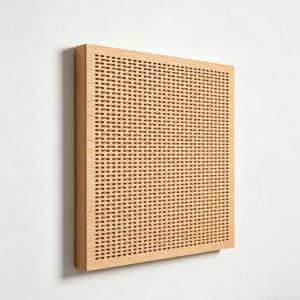
2. Birch Plywood
Birch plywood is commonly used for decorative acoustic panels where a natural wood finish is desired. It offers excellent detail resolution and supports very fine perforation patterns.
Laser cutting plywood typically produces visible scorch marks on the surface and edges. This is normal and can be removed through light sanding during post-processing.
Typical specifications:
- Thickness: 3 mm
- Minimum hole size: 0.5 mm
- Post-processing: sanding required
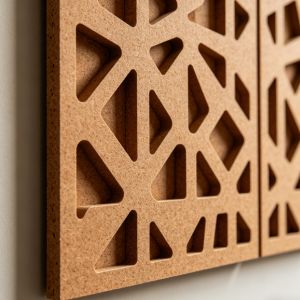
3. MDF Panels
MDF is often used when a smooth, paintable surface is required. It cuts cleanly under CO2 laser systems but produces more fumes than PET felt or plywood.
Because of this, a strong extraction system is essential when processing MDF. Before cutting MDF, always verify the material composition to ensure compatibility with laser processing.
Laser Cutting vs CNC Oscillating Knife
Choosing between laser vs CNC acoustic panel cutting depends on your production goals and design requirements.
CNC Oscillating Knife
A CNC oscillating knife cuts materials mechanically without heat. This results in clean edges with no burn marks, which is especially useful for PET felt applications.
However, the blade size limits the minimum detail. In practice, features smaller than about 10 mm are difficult to achieve.
Best suited for:
- Large shapes
- Standard perforation patterns
- High-volume production
CO₂ Laser Cutting
CO₂ laser cutting is better suited for high-detail designs, including:
- Fine text
- Logos
- Small perforations
- Halftone acoustic panels
It is the preferred solution for custom and design-driven acoustic panel production.
| Feature | CO₂ Laser Cutting | CNC Oscillating Knife |
|---|---|---|
| Minimum Detail | 1–2 mm precision | Around 10 mm limit |
| Edge Quality | Fused edges or slight charring | Clean cut, no burn marks |
| Best For | Logos, fine text, halftone acoustic panels | Large shapes and standard patterns |
| Tooling | No tooling required | No tooling required |
| Design Flexibility | Very high — complex geometry supported | Limited by blade size |
Source: MimoWork internal testing & application data.
Quick Answer (Snippet Ready)
CO₂ laser cutting is best for fine details, logos, and halftone panels. CNC oscillating knife cutting is best for large shapes and clean-edge production.
Request a test cut on your Acoustic Panels.
Design Capabilities of CO₂ Laser Cutting
Geometric Perforation
Laser systems can produce highly consistent geometric patterns across large acoustic panels, including hexagonal grids, circular arrays, and custom tessellations. This makes them ideal for architectural and decorative applications requiring precision and repeatability.
Custom Logos and Branding
CO₂ laser cutting allows manufacturers to cut or engrave logos directly into acoustic panels. This capability is widely used in branded interiors, retail environments, and commercial spaces where visual identity is important.
Halftone Acoustic Panels
Halftone acoustic panels use varying hole sizes and spacing to reproduce images, gradients, or visual effects. From a distance, the pattern appears as a continuous image.
This is one of the most advanced and high-value applications of laser cutting, especially when fine detail and visual impact are required.
Surface Engraving
Laser engraving enables partial-depth processing without cutting through the material. This allows designers to create textures, patterns, or branding elements while maintaining the structural integrity of the panel.
How to Cut Felt with a Fabric Laser Cutter

Auto feeder co2 laser felt cutting machine can satisfy you. Laser cutting felt is an automatic process with auto-feeding and auto-conveying. Come to the video to discover flexible pattern cutting on the felt.
CO₂ Laser Machine Specifications
Choosing the right hardware is critical for consistent production quality and efficiency. Below are the key technical factors to consider:
Power Output
Power determines cutting speed and maximum material thickness.
Working Area
A working area of at least 1300 × 900 mm is recommended to handle standard panel sizes without repositioning.
Repositioning can introduce alignment errors, especially in detailed perforation or halftone designs.
Software Capability
Acoustic panel files can contain tens of thousands of cutting paths. Not all control systems handle this efficiently.
For CO₂ laser machine acoustic panel production, make sure the software can process high path-count files without slowing down or skipping segments.
Extraction System
Proper extraction is essential. PET felt, plywood, and MDF all produce fumes during cutting.
Poor extraction can lead to:
- Surface contamination
- Reduced cut quality
- Safety risks
Production Tips and Workflow Considerations
Efficiency in acoustic panel production often comes down to small adjustments in the workflow.
- Run test cuts before full production to verify edge quality.
- Secure materials firmly to the honeycomb bed to prevent movement.
- For surface engraving, maintain a 3–4 mm base layer for structural integrity.
Safety Guidelines
CO₂ laser cutting requires strict adherence to safety protocols, especially when processing synthetic materials.
- Strict Ban: Never cut materials containing PVC (releases toxic chlorine gas).
- Supervision: Do not leave the machine unattended during high-power cutting.
- Maintenance: Regularly clean the extraction filters to maintain laser efficiency.
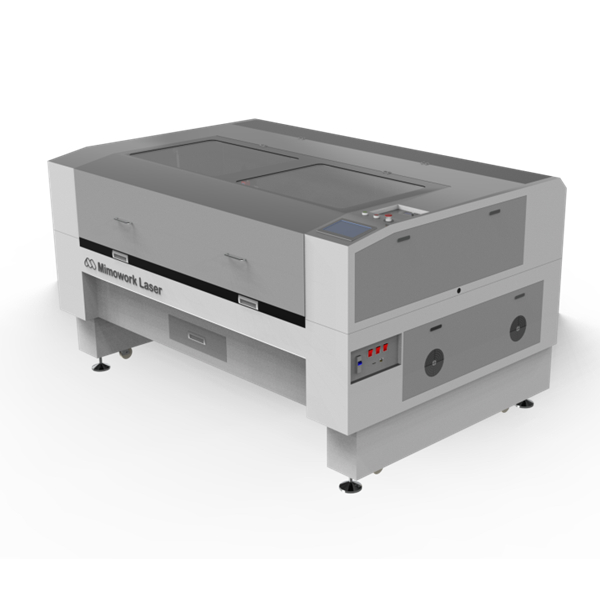
Recommended CO₂ Laser Machines for Acoustic Panel Production
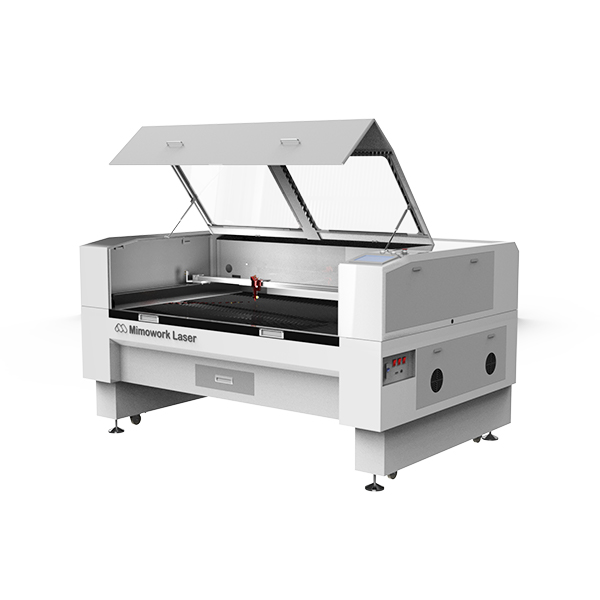
Tell us your needs—we’ll match the right machine.
FAQ: Laser Cut Acoustic Panels
A: Laser cut acoustic panels are sound-absorbing panels with precision-cut patterns used to control noise and enhance interior design.
A: Yes. CO₂ lasers are highly effective for PET felt laser cutting. The material absorbs laser energy well, producing sealed edges with minimal fraying.
A: CO₂ laser cutting is better for detailed designs, logos, and halftone panels. CNC cutting is better for large shapes and high-volume standard production.
A: 80–100W is suitable for standard production. For thick PET felt, 130W or higher is recommended.
Conclusion
CO₂ laser cutting is a strong fit for acoustic panel manufacturing. It matches the materials, supports high design complexity, and allows flexible production from prototypes to large batches.
For manufacturers, the key considerations are material thickness, design complexity, and production volume. These factors determine the right machine configuration and workflow.
If your business focuses on custom acoustic panels, decorative perforation, or branded interior solutions, laser cut acoustic panels produced with CO₂ laser systems offer a practical and scalable solution.
Related Articles


Send your material details and get a usable cutting setup.
Post time: Apr-16-2026