

Is It Feasible to Laser Cut Thin Thermally Conductive Pyrolytic Graphite Sheets?
What is Pyrolytic Graphite?
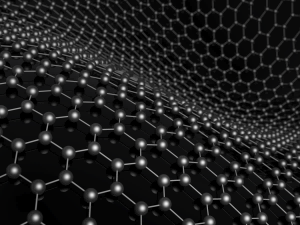
Pyrolytic graphite (PG): a synthetic carbon material produced by CVD. Pyrolytic graphite sheets (PGS) are made by carbonizing and graphitizing polymer films at high temperature.
Its key characteristic: heat conducts extremely fast in the horizontal (in-plane) direction—up to 1,800 W/m·K, 2–5 times that of copper—but barely passes through the thickness (through-plane) direction, much like heat prefers to "race" along the surface rather than "drill" vertically through the layers.
What is the Difference Between Pyrolytic Graphite and Ordinary Graphite Sheet?
| Feature | Pyrolytic Graphite Sheet (PGS) | Ordinary Graphite Sheet |
|---|---|---|
| Manufacturing | Pyrolysis of polymer film (e.g., polyimide) at high temperature | Heating and pressing acid-treated graphite powder into film shape |
| Crystal Structure | Highly oriented, graphene layers arranged in same direction | Microscopically randomly oriented zones |
| In-Plane Thermal Conductivity | Ultra-high: up to 1,800 W/m·K | Significantly lower (order of magnitude less) |
| Anisotropy | Extreme—enormous difference between X-Y and Z directions | Moderate |
In short, pyrolytic graphite sheet (PGS) is a high-performance engineered material with dramatically superior thermal conductivity compared to ordinary expanded graphite sheets.
Can Laser Cut Pyrolytic Graphite Sheet?
Yes, laser can cut pyrolytic graphite sheet—but with important caveats.
Feasibility
Laser cutting of pyrolytic graphite sheet is technically feasible and has been demonstrated in both research and industrial settings. Patents exist for laser cutting devices specifically designed for processed graphite laminates, confirming industrial viability. Research has successfully used femtosecond lasers, nanosecond pulsed lasers, and Nd:YAG lasers for processing highly oriented pyrolytic graphite.
High-quality cuts are achievable: under optimized conditions, sheet laser cutting can produce parts with excellent edge quality—reduced heat-affected zone (HAZ), no recast layer, no micro-cracks, and minimal debris. Panasonic, a major PGS manufacturer, explicitly states that their pyrolytic graphite sheets can be cut into customizable shapes.
Challenges
High thermal conductivity (up to 1,800 W/m·K in‑plane) dissipates laser energy, requiring higher power or specialized pulse strategies.
Strong anisotropy demands careful parameter tuning between in‑plane and through‑plane directions.
Delamination risk due to layered structure under excessive heat or mechanical stress.
Conductive carbon dust may cause short circuits in electronic applications.
Conclusion
Laser cutting of pyrolytic graphite sheet is absolutely feasible, but it requires proper laser selection (femtosecond or short-pulse lasers often preferred for minimizing thermal damage), optimized parameters (power, speed, pulse duration), appropriate atmosphere, and dust management systems. For thin pyrolytic graphite sheets (12–100 μm thickness), sheet laser cutting is particularly well-suited due to the minimal material that needs to be removed.
Laser Cutting vs. Water Jet Cutting vs. Punching Cutting
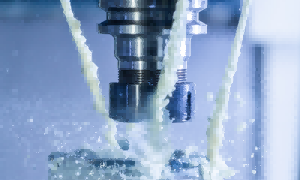
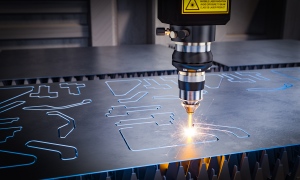
| Factor | Laser Cutting | Water Jet Cutting |
|---|---|---|
| Mechanism | Thermal (melt/vaporize) | Mechanical (abrasive erosion) |
| Heat-Affected Zone | Yes (controllable) | None (cold cutting) |
| Edge Quality on PGS | Excellent (smooth, minimal HAZ) | Good (may roughen from abrasive impact) |
| Delamination Risk | Low-Moderate | Lower (no thermal stress) |
| Precision | Very high | Good (less for fine features) |
| Best Thickness | Thin sheets (12–100μm) | Thicker materials |
| Equipment Cost | High | High |
| Operating Cost | Moderate | Higher (abrasive consumption) |
| Suitability for PGS | Excellent—thin, precise, complex | Acceptable—abrasive may damage thin PGS |
| Factor | Laser Cutting | Punching |
|---|---|---|
| Mechanism | Non-contact thermal ablation | Contact mechanical shearing |
| Heat-Affected Zone | Yes (controllable) | None |
| Edge Quality on PGS | Excellent (smooth, no burrs) | Poor (burrs, severe delamination) |
| Delamination Risk | Low-Moderate (thermal) | High (mechanical stress) |
| Tooling Cost | None | High |
| Setup/Changeover | Fast (digital) | Slow (die change) |
| Speed per Part | Moderate | Very fast (high volume) |
| Volume Suitability | Prototyping, small-to-medium | Mass production |
| Complex Shapes | Excellent (any shape) | Limited (simple only) |
| Material Deformation | None | Significant (mechanical force) |
| Suitability for PGS | Excellent (thin, fragile) | Poor (high delamination risk) |
| Factor | Laser Cutting | Water Jet Cutting | Punching |
|---|---|---|---|
| Thermal Damage | Yes (controllable) | None | None |
| Delamination Risk | Low-Moderate | Low | High |
| Precision | Highest | High | Moderate |
| Complex Shapes | Excellent | Good | Poor |
| High-Volume Speed | Moderate | Slow | Very Fast |
| Tooling Cost | None | None | High |
| Recommended for PGS | Strongly | Limited (thick blocks) | Not recommended |
Laser cutting: Highest precision, best for complex shapes, no tooling cost, controllable delamination — strongly recommended.
Water jet cutting: No heat damage, lowest delamination risk, but lower precision and shape flexibility — limited suitability.
Punching: Fastest for high volume, but high delamination risk, moderate precision, expensive tooling, simple shapes only — not recommended.
Learn about different laser types for material processing
Application Areas of Pyrolytic Graphite sheet
Pyrolytic graphite finds applications across multiple high-tech industries:
Consumer Electronics
Thermal interface pads and heat spreaders for smartphones, laptops, tablets, CPUs, GPUs, semiconductors, high-power batteries, and 5G/IoT devices. It can replace thermal grease, eliminate "hot spots," and reduce skin temperature.
Aerospace & Medical
Thermal management for critical electronics, sensors, and medical devices.
Telecommunications
EMI shielding and heat dissipation for communication base stations.
Precautions for Laser Cutting Pyrolytic Graphite Sheet
1. Dust Control: Laser cutting generates fine carbon particles that are electrically conductive. If these particles fall on electronic circuits, they can cause short circuits. Always use proper dust extraction and filtration systems.
2. Delamination Prevention: The layered structure of pyrolytic graphite is susceptible to layer separation under thermal stress. Use short-pulse or femtosecond lasers to minimize heat input and reduce thermal damage.
3. Parameter Optimization: Pyrolytic graphite sheet has extremely high in-plane thermal conductivity (up to 1,800 W/m·K), which rapidly dissipates heat. Laser cutting machine parameters (power, speed, pulse duration) must be carefully optimized to achieve clean cuts.
4. Atmosphere Control: Cutting under appropriate conditions significantly improves edge quality—reducing the heat-affected zone, eliminating recast layers, and preventing micro-cracks.
5. Material Support: Thin pyrolytic graphite sheets (as thin as 12 μm) require proper backing or support during cutting to prevent tearing or deformation.
Pyrolytic graphite laser cutting generates conductive carbon dust, so a dust extraction system is required. You can check here for more details.
FAQ
A: Pyrolytic graphite exhibits extremely high thermal stability, remaining stable in an inert atmosphere up to approximately 4000 K (about 3727°C) . However, in air, oxidation can occur at elevated temperatures, so the practical working temperature depends on the environment and atmosphere.
A:Potentially, yes. During laser cutting, high temperatures may release organic compounds such as polycyclic aromatic hydrocarbons (PAHs) , as well as toxic gases and vapours. Additionally, the generated graphite dust can be harmful if inhaled. It is strongly recommended to ensure good ventilation, wear dust masks, and use dust extraction and filtration systems during laser cutting.
A:PGS should be stored in a normal temperature, dry, and dark environment. Avoid exposure to:
Salt water and direct sunlight
lCorrosive gases (hydrogen sulphide, sulphurous acid, chlorine, ammonia, etc.)
Acidic substances
Humid conditions (moisture may penetrate and cause internal corrosion)
Keep the material in its original sealed packaging until use.
A: Yes, but with caution. Die cutting is a common method for high volume PGS production. However, like punching, die cutting is a contact mechanical process and carries a delamination risk. Recommendations:
Use a gentler die cutting method (e.g., flatbed die cutting rather than high speed punching)
Apply edge wrapping to prevent dust shedding
For complex shapes, laser cutting remains a safer choice
Do you have any questions about laser cutting thermal conductive graphite sheets?
Post time: Jun-17-2026