

Exploring the Art of Laser Cutting Dresses:Materials and Techniques
Make a lovely dress by fabric laser cutter
What is a Laser Cutting Dress?
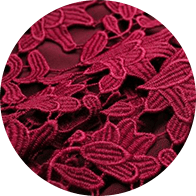
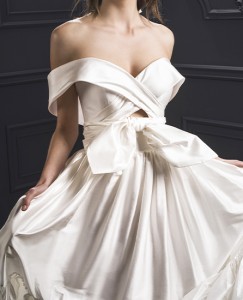
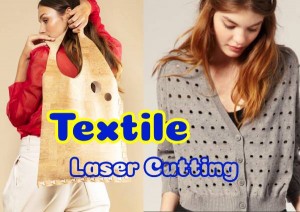
A laser cutting dress is a garment that has been created using laser fabric cutter technology. The laser is used to cut intricate patterns and designs into the fabric, creating a unique and intricate look that cannot be replicated by any other method. Laser cutting dresses can be made from a wide variety of fabrics, including silk, cotton, leather, and even paper.
How are Laser Cutting Dresses Made?
The process of making a laser cutting dress starts with the designer creating a digital pattern or design that will be cut into the fabric. The digital file is then uploaded to a computer program that controls the laser cutting machine.
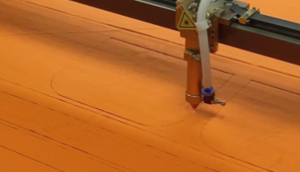
The fabric is placed onto a cutting bed, and the laser beam is directed onto the fabric to cut out the design. The laser beam melts and vaporizes the fabric, creating a precise cut with no fraying or fraying edges. The fabric is then removed from the cutting bed, and any excess fabric is trimmed away.
Once the Laser cutting for fabric is complete, the fabric is then assembled into a dress using traditional sewing techniques. Depending on the complexity of the design, additional embellishments or details may be added to the dress to further enhance its unique look.
This video fully records the entire process of laser cutting fabric, showcasing the core advantages of non-contact cutting, automatic edge sealing, and high efficiency and energy saving. If you have any questions about the operation process of laser cutting fabric, feel free to watch this video to learn more.
Comparison of Laser Cutting Vs. Other Methods for Dress Fabrics
Laser cutting offers irreplaceable advantages in precision, no fabric distortion,complex openwork, no die cost, and design flexibility. It is especially suitable for lace effects,custom patterns, and rapid iteration on dresses. For high‑volume standard shapes without finedetails, die cutting or ultrasonic cutting may be considered; for ultimate detail and personalisation, laser is the best choice.
| Aspect | Laser Cutting | Scissors / Rotary Cutter | Ultrasonic Cutting | Die Cutting |
|---|---|---|---|---|
| Cutting method | Non‑contact, light‑based ablation/vaporization | Contact blade shearing | High‑frequency vibration friction | Die stamping |
| Fabric distortion | No拉扯 – ideal for delicate fabrics like silk, thin cotton | Easily pulls and distorts fabric edges | Vibration can wrinkle thin, elastic fabrics | Stretching stress during stamping |
| Minimum cut width / precision | 0.1–0.3 mm, extremely high precision | Blade limited, difficult below 1 mm | Approx. 0.5–1 mm | Depends on die precision, typically >0.5 mm |
| Complex pattern capability | Easily handles lace cutouts, micro‑holes, geometric openwork, internal voids | Cannot achieve tiny corners or interior cuts | Limited for fine, intricate patterns | Complex shapes possible but high die cost |
| Edge effect (synthetic fibers) | Smooth sealed edge, no fraying | Frayed edges, require overlocking | Seals moderately, but thickness uneven | Frayed or slight impression |
| Edge effect (natural fibers) | Thin dark/brown line (0.5–1 mm), can be decorative | Needs hemming/serging, otherwise frays | Poor results, easily scorched | Frayed |
| Automation & complex paths | Fully programmable, executes any trajectory automatically | Manual or semi‑auto, high complexity difficult | Programmable but path limited | Fixed path, not variable |
| Typical speed | Fast | Slow, manual operation | Medium | Very fast (excluding die preparation time) |
If you would like a more detailed comparison between laser cutting and die cutting on fabric, you can click here
Common Problems and Solutions in Laser Cutting of Dress Fabrics
• Burnt or severely charred edges
Possible causes: Laser power too high; cutting speed too slow; insufficient or no assist gas; focus offset.
Solutions:
- Reduce power appropriately or increase cutting speed to find the critical parameter where the fabric is just cut through.
- Ensure dry compressed air or nitrogen is turned on (pressure 0.3–0.6 MPa) to blow away heat and smoke.
- Re‑calibrate the laser focus to obtain the smallest spot size and most concentrated energy.
• Cut outline distortion / dimensional inaccuracy
Possible causes: Fabric shrinks or stretches due to heat during cutting; fabric not fixed flat; design file does not account for shrinkage.
Solutions:
- Use magnetic hold‑down strips, high‑temperature tape, or a perforated acrylic sheet to hold the fabric flat on the worktable.
- For heat‑sensitive fabrics (e.g., spandex, nylon), pre‑shrink them first (low‑temperature baking or washing) before cutting.
- Add shrinkage compensation in the design file (fine‑tune based on test results).
• Inconsistent cutting results within the same batch
Possible causes: Laser tube aging causing power drop; contaminated lenses; debris on the worktable making the fabric uneven; large fluctuations in ambient temperature / humidity.
Solutions:
- Check the laser tube's operating hours and replace it if necessary.
- Clean the lenses daily and calibrate the beam path once a month.
- Remove waste residues from the worktable and keep it flat.
- Operate in a constant temperature and humidity environment (recommended temperature 20–25°C, humidity 45%–65%).
What Fabrics Work Best for Laser Cutting Dresses?
While laser cutting can be used on a wide variety of fabrics, not all fabrics are created equal when it comes to this technique. Some fabrics may burn or discolor when exposed to the laser beam, while others may not cut cleanly or evenly.
The best fabrics for Fabric laser cutter dresses are those that are natural, lightweight, and have a consistent thickness. Some of the most commonly used fabrics for laser cutting dresses include:
• Silk
Silk is a popular choice for laser cutting dresses because of its natural sheen and delicate texture. However, it's important to note that not all types of silk are suitable for laser cutting - lighter weight silks like chiffon and georgette may not cut as cleanly as heavier weight silks like dupioni or taffeta.
• Cotton
Cotton is another popular choice for laser cutting dresses because of its versatility and affordability. However, it's important to choose a cotton fabric that is not too thick or too thin - a medium-weight cotton with a tight weave will work best.
• Leather
Laser cutting can be used to create intricate designs on leather, making it a popular choice for edgy or avant-garde dresses. However, it's important to choose a high-quality, smooth leather that is not too thick or too thin.
• Polyester
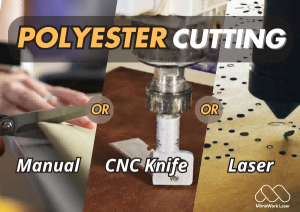
Polyester is a synthetic fabric that is often used for laser cutting dresses because it can be easily manipulated and has a consistent thickness. However, it's important to note that polyester can melt or warp under the high heat of the laser beam, so it's best to choose a high-quality polyester that is specifically designed for laser cutting.
• Paper
While not technically a fabric, paper can be used for laser cutting dresses to create unique, avant-garde looks. However, it's important to use a high-quality paper that is thick enough to withstand the laser beam without tearing or warping.
This video explains how to select the appropriate laser power for different fabrics to achieve clean cuts and avoid scorch marks, while highlighting the advantages of laser cutting such as fray‑free edges, higher efficiency, and the ability to handle various materials.
What Fabrics Work Are Not Suitable for Laser Cutting of Dresses?
While laser cutting can be used on a wide variety of fabrics, not all fabrics are created equal when it comes to this technique. Some fabrics may melt or curl when exposed to the laser beam, while others may produce toxic fumes or catch fire easily. Fabrics that are synthetic, loosely woven, or have an uneven surface often yield poor results.
The fabrics that are not suitable for laser cutting of dresses include those made from or containing PVC, vinyl, and other chlorine-based materials, as well as very thin or highly flammable synthetics like certain nylons and polyesters. Other problematic choices are velvet (which singes and leaves a burnt edge), fleece (which melts and hardens), and fabrics with metallic threads or coatings that reflect the laser or release hazardous smoke:
• Chlorine-containing materials
When laser cut, these fabrics release highly toxic hydrogen chloride and chlorine gases, which severely irritate the respiratory tract and harm the operator's health. They also corrode the metal parts of the laser machine, shortening its lifespan. Meanwhile, the cut edges produce sticky, tar‑like black residues that make the fabric unsuitable for delicate dressmaking.
• High-content polyester
These synthetic fibers have a low melting point. The high temperature generated by the laser causes the fabric edges to melt, curl, and form hard beads instead of creating clean cuts. The molten material can drip and cause a fire hazard. Furthermore, the hardened edges rub against the skin, affecting both the comfort and the visual quality of the finished dress.
• Spandex and high‑elasticity fabrics
Due to their high thermal sensitivity, laser cutting creates melted beads while the elastic fibers shrink from heat, distorting openwork patterns. The cut edges become uneven and the dimensional stability is lost. This makes them particularly unsuitable for precise cutouts or form‑fitting parts of an elastic dress.
• Metallic threads
The metallic components strongly reflect the laser beam, potentially damaging the laser’s optical lenses and causing equipment failure. At the same time, the high thermal conductivity of the metal threads quickly burns the surrounding fabric, resulting in jagged, scorched edges. This prevents any fine patterning and introduces serious safety risks.
• Thin synthetic chiffon
These materials have low density and small thickness, making it extremely difficult to control the laser energy precisely. They easily ignite and burn rapidly instead of being cleanly vaporized. The result is extensive charring, holes, and even a fire hazard, making it impossible to achieve the clean cutouts or lace effects required for a dress.
If you are unsure whether your fabric can be laser cut, please feel free to contact us
Recommended Fabric laser cutter
| Parameter | Specification |
|---|---|
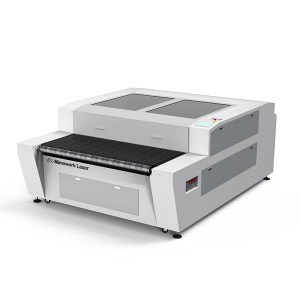
| Working area | Standard: 1600 mm × 1000 mm (customizable) |
| Speed | Cutting speed: 1 – 400 mm/s; Acceleration: 1000 – 4000 mm/s² |
| Edge quality | Non-contact laser cutting, no distortion from tension; sealed edges without fraying, suitable for delicate fabrics such as lace and silk |
| Parameter | Specification |
|---|---|
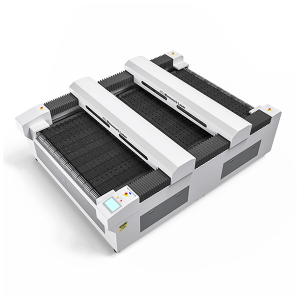
| Working area | 1600 mm × 3000 mm (62.9" × 118") |
| Speed | Cutting speed: 1 – 600 mm/s; Acceleration: 1000 – 6000 mm/s² |
| Edge quality | Non-contact laser cutting, no distortion from tension; precise and stable cutting with clean, sealed edges, suitable for delicate fabrics such as lace and silk |
Any questions about the operation of Fabric Laser Cutter?
Post time: Mar-30-2023